The Middle East Crisis: Complete Guide 2026
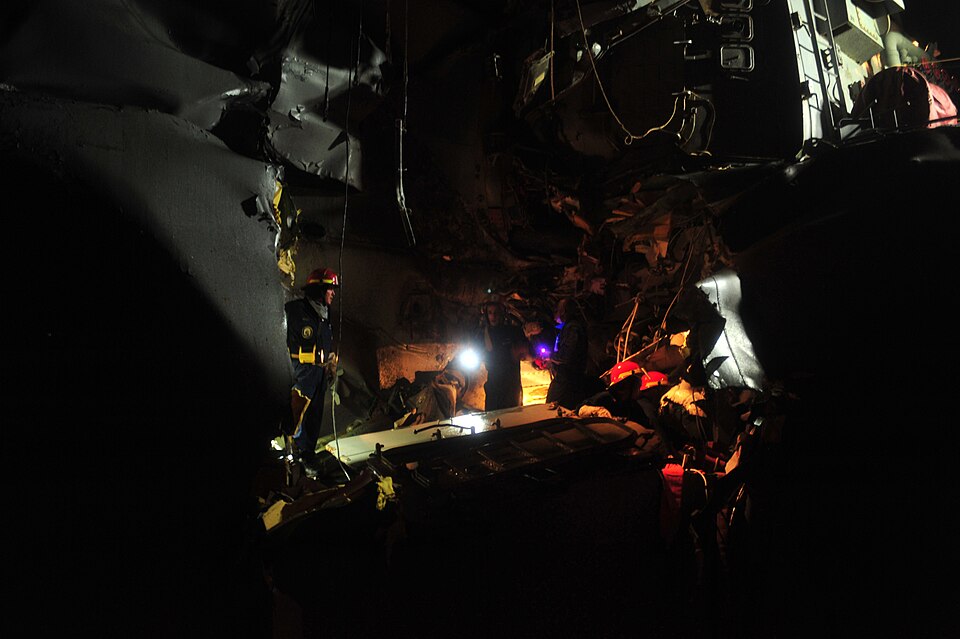
The cargo ship *MSC Geneva* sits dead in the water 120 nautical miles southeast of Aden, its hull split by a Houthi missile that bypassed its defensive systems at 0347 local time on January 23rd. Captain Nikos Stavros watches from the bridge as his crew abandons ship—another casualty in a regional crisis that now threatens global commerce, energy supplies, and the stability of governments from Washington to Beijing.
This single vessel tells the story of how a crisis that began with Hamas rockets on October 7, 2023, has metastasized into something approaching regional war. The *MSC Geneva* was carrying semiconductors from Taiwan to Rotterdam, worth $340 million. Its destruction will ripple through supply chains already strained by three years of escalating conflict across the Middle East. By the time you finish reading this, the cost of that destroyed cargo will have been factored into the price of everything from smartphones to automobiles.
The Arc of Crisis: From Tehran to Tel Aviv to the Gulf
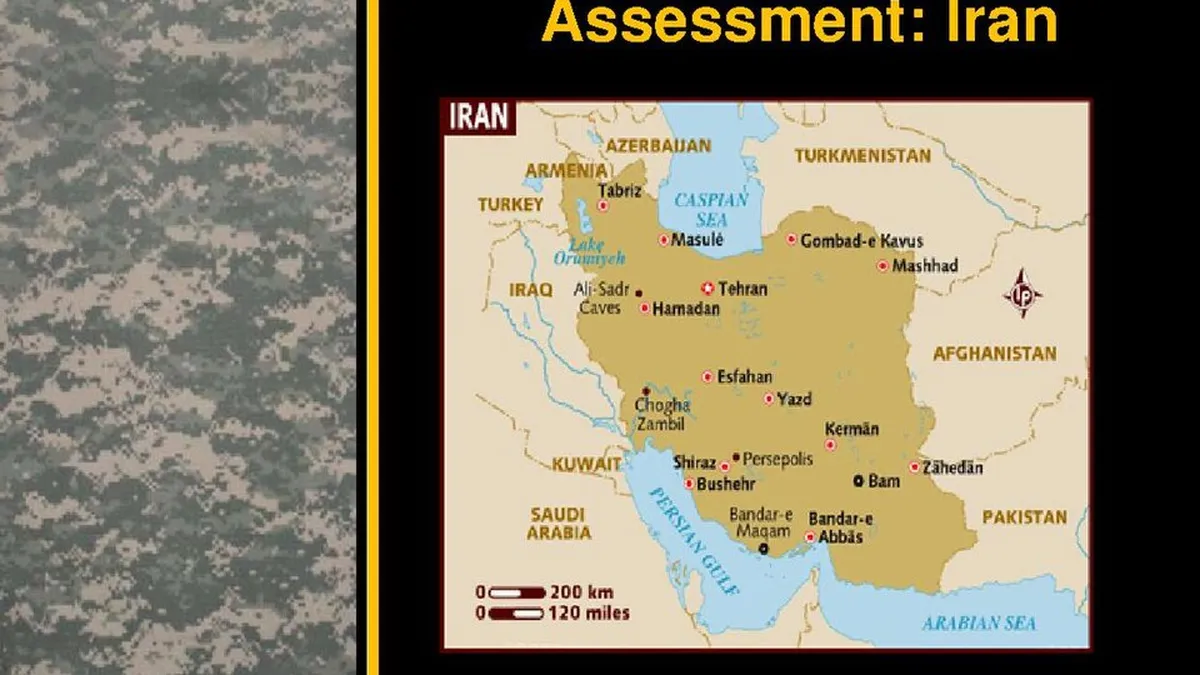
The current Middle East crisis operates as an integrated system spanning 2,000 miles from Iran's nuclear facilities to the Red Sea shipping lanes. Unlike previous regional conflicts that remained largely contained, this crisis functions through what military analysts call "escalation management"—each actor calibrating their aggression to avoid crossing red lines while maximizing pressure on adversaries.
The Institute for the Study of War (ISW) has mapped what it terms the "Axis of Resistance"—Iran's network of proxy forces extending through Iraq's Popular Mobilization Forces, Lebanon's Hezbollah, Syria's Assad regime, and Yemen's Houthis. This network gives Iran the ability to strike Israeli, American, and Gulf Arab interests across the region without direct confrontation.
The numbers reveal the scope: Since October 2023, Iranian proxies have conducted over 2,400 attacks against Israeli targets, 890 attacks on U.S. forces in Iraq and Syria, and 450 attacks on commercial shipping in the Red Sea, according to Pentagon data released in December 2025. Each attack serves Iran's strategy of imposing costs on its adversaries while maintaining plausible deniability.
But here's what most analysts are missing: this isn't really about Palestine or even Israel. The current crisis represents Iran's last opportunity to secure regional dominance before demographic collapse and economic stagnation irreversibly weaken the Islamic Republic. Iran's population growth rate has fallen to 1.1%, below replacement level, while sanctions have reduced its economy to roughly the size of Wisconsin's. The regime faces a closing window to either break out of containment or accept permanent strategic subordination.
For President Trump, returning to office in January 2025, the crisis presents both opportunity and constraint. His "maximum pressure" campaign during his first term brought Iran's oil exports down to 200,000 barrels per day by 2020. But the Biden administration's partial sanctions relief allowed Iranian exports to recover to roughly 1.5 million barrels per day by 2024, providing Tehran with resources to fund proxy operations across the region.
The Washington Institute for Near East Policy estimates Iran now spends $16 billion annually supporting proxy forces—nearly 20% of its total government budget. This spending has accelerated as Supreme Leader Ali Khamenei, now 85, appears determined to secure his revolutionary legacy before his death triggers a succession crisis within the regime.
Iran: The Central Player
Inside the Imam Reza shrine in Mashhad, pilgrims pray before the golden tomb while Revolutionary Guards officers move through the crowds in civilian clothes, monitoring for signs of dissent. This scene—religious devotion mixed with state surveillance—captures Iran's fundamental contradiction: a revolutionary regime increasingly dependent on coercion rather than legitimacy to maintain power.
Iran's nuclear program sits at the center of the regional crisis, but not in the way most observers understand. According to the International Atomic Energy Agency's (IAEA) December 2025 report, Iran now possesses roughly 165 kilograms of uranium enriched to 60% purity—enough for four nuclear weapons if further enriched to weapons-grade 90%. But Iranian decision-makers view the nuclear program primarily as a hedge against regime collapse rather than a path to regional dominance.
The economic data tells the story: Iran's GDP remains roughly 15% smaller than it was in 2011, before the most severe sanctions took effect. The rial has lost 85% of its value against the dollar since 2018. Youth unemployment exceeds 25%, and the regime faces periodic protests that require increasingly violent suppression.
Supreme Leader Khamenei's response has been to double down on the "Axis of Resistance" strategy. Intelligence reports suggest Iran transferred over $2 billion to Hezbollah in 2024, including advanced missile technology that allows the group to threaten Israeli population centers with precision-guided munitions. Similar transfers have upgraded Houthi capabilities in Yemen, enabling attacks on commercial shipping that have increased global freight costs by an average of 12%.
But Iran's proxy strategy creates its own vulnerabilities. Each escalation risks triggering Israeli or American retaliation that could cripple Iran's limited military capabilities. The January 2024 Israeli airstrike on Iran's consulate in Damascus, which killed several Revolutionary Guards commanders, demonstrated Tehran's difficulty in responding proportionally to direct attacks.
Iranian decision-making remains concentrated in the hands of Khamenei and a small circle of Revolutionary Guards commanders. The regime's internal documents, obtained by opposition groups and analyzed by RAND Corporation researchers, reveal growing concern about the sustainability of current policies. Several senior officials have privately warned that continued escalation could provoke an Israeli attack on Iran's nuclear facilities, which would eliminate the regime's primary deterrent while potentially triggering domestic unrest.
Israel's Strategic Calculus
Prime Minister Benjamin Netanyahu sits in his office on the eighth floor of the Kirya, Tel Aviv's defense complex, studying satellite imagery of Hezbollah positions in southern Lebanon. The photos show concrete bunkers, missile launchers, and tunnel entrances—infrastructure built over fifteen years with Iranian funding and expertise. For Netanyahu, these images represent both Israel's strategic dilemma and its opportunity.
Israel's military doctrine has evolved significantly since October 7, 2023. The intelligence failures that enabled Hamas to launch its surprise attack have forced a fundamental reassessment of threats and capabilities. The Israel Defense Forces (IDF) now operates under the assumption that Iran and its proxies are actively preparing for coordinated attacks designed to overwhelm Israeli air defenses and inflict mass casualties.
The Brookings Institution's analysis of Israeli defense spending shows a 40% increase since 2023, reaching roughly $30 billion annually—nearly 6% of GDP. This spending has focused on three priorities: expanding missile defense capabilities, developing offensive options against Iranian nuclear facilities, and preparing for simultaneous conflicts on multiple fronts.
Israeli intelligence assessments, briefed to Congressional delegations in late 2025, estimate that Hezbollah now possesses over 150,000 rockets and missiles, including precision-guided munitions capable of hitting specific buildings in Tel Aviv. This arsenal represents a qualitative change from previous conflicts, when Hezbollah relied primarily on short-range, unguided rockets.
Netanyahu's political survival depends partly on maintaining the perception that Israel can manage regional threats without making territorial concessions to Palestinians or accepting constraints on its freedom of action. His coalition includes parties that view any withdrawal from the West Bank as an existential threat to Israel's security, while his legal troubles require him to maintain public support through demonstrations of strength.
But Israel's strategic environment has fundamentally shifted. The Abraham Accords, which normalized relations with several Arab states, have been strained by Israel's military operations in Gaza and the West Bank. Saudi Arabia, which was approaching normalization before October 2023, has suspended diplomatic progress indefinitely. The Gulf states maintain security cooperation with Israel but avoid public association with Israeli policies.
Israeli military planners now operate under the assumption that any future conflict will involve multiple fronts simultaneously. War games conducted in 2025 modeled scenarios involving Hezbollah attacks from Lebanon, Iranian missile strikes, Houthi attacks on shipping, and Palestinian uprising in the West Bank occurring within a compressed timeframe.
The most sensitive aspect of Israeli planning involves potential preemptive strikes against Iranian nuclear facilities. Such operations would require either American support or acceptance of significant risks to Israeli aircraft overflying hostile territory. Israeli officials have briefed American counterparts on operational concepts, but Trump administration officials have not committed to support for preemptive action.
Lebanon and Hezbollah: The Northern Front
In the Dahieh, Hezbollah's stronghold in southern Beirut, residents navigate around concrete barriers and armed checkpoints that have become permanent fixtures of the neighborhood. Children play soccer in narrow alleys while their parents queue for subsidized bread and fuel—daily reminders of Lebanon's economic collapse and Hezbollah's role as both protector and primary cause of the country's isolation.
Lebanon exists as a failed state kept barely functional by Hezbollah's parallel institutions and Iranian financing. The Lebanese pound has lost 95% of its value since 2019, while the banking system remains largely frozen. The World Bank estimates that over 75% of Lebanon's population lives below the poverty line, making it one of the most severe economic collapses in modern history.
Hezbollah has used Lebanon's weakness to expand its control over state institutions while building military capabilities that rival those of many national armies. The group now controls Lebanon's borders with Syria, manages the country's primary port facilities, and operates its own financial system through Iranian banking connections.
U.S. Treasury Department sanctions have targeted Hezbollah's financial networks, but the group has adapted through cryptocurrency transactions and trade-based money laundering. Intelligence reports suggest Hezbollah generates between $700 million and $1 billion annually through legitimate businesses, criminal activities, and Iranian transfers.
The group's military capabilities have expanded dramatically since its 2006 war with Israel. Beyond its rocket arsenal, Hezbollah now operates sophisticated air defense systems, anti-ship missiles, and armed drones. Israeli intelligence assessments credit Hezbollah with approximately 100,000 fighters, including elite units trained by Iranian advisors and veterans of the Syrian conflict.
Hezbollah's strategic value to Iran lies partly in its ability to threaten Israeli population centers while maintaining enough distance to avoid triggering massive Israeli retaliation against Iran directly. But this strategy creates tensions within Lebanese society, where many citizens recognize that Hezbollah's military buildup makes Lebanon a target for Israeli attack.
The group's decision-making process reflects this tension. Hezbollah Secretary-General Hassan Nasrallah must balance Iranian strategic objectives against the risk of triggering a war that could destroy both his organization and what remains of the Lebanese state. Intelligence reports suggest significant debate within Hezbollah's leadership about the appropriate level of escalation against Israeli targets.
The Gulf States: Caught in the Middle
Crown Prince Mohammed bin Salman stands on the observation deck of the NEOM construction site, watching bulldozers reshape the Saudi desert into what planners promise will become a futuristic megacity. But the prince's attention increasingly focuses on a more immediate challenge: managing Saudi Arabia's relationship with both Iran and Israel while maintaining the American security guarantee that underpins the kingdom's defense strategy.
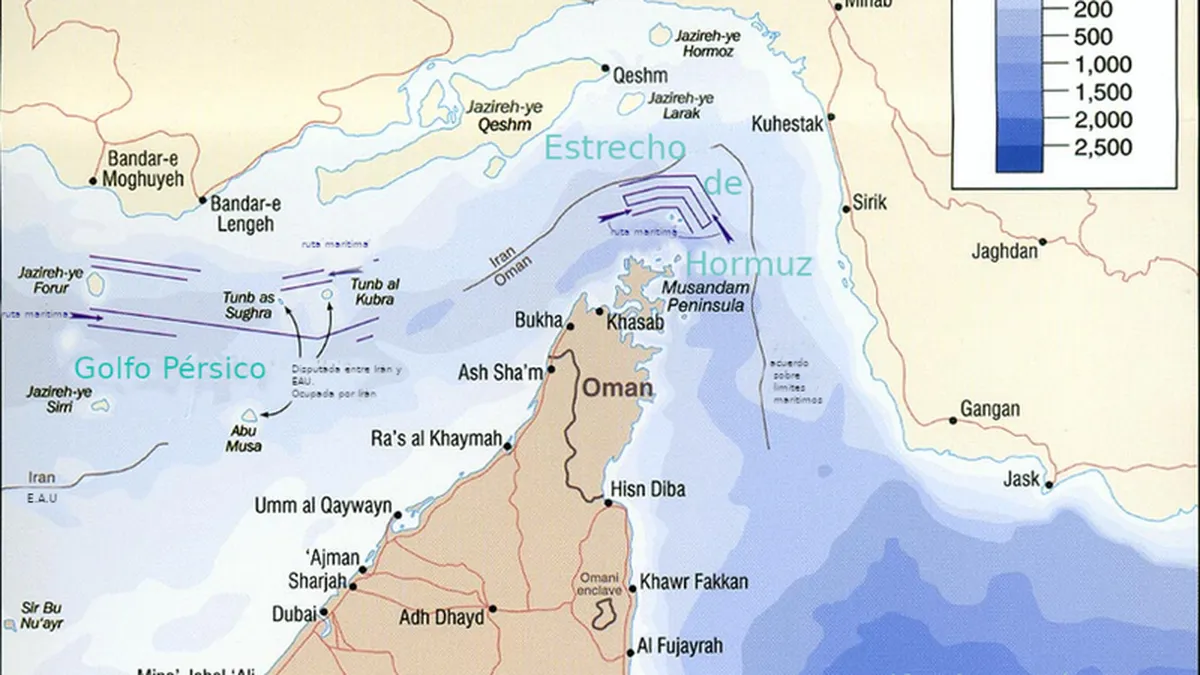
The Gulf states—Saudi Arabia, the UAE, Kuwait, Qatar, Bahrain, and Oman—find themselves navigating between competing regional powers while managing their own economic transitions away from oil dependence. The current crisis has forced these states to choose between their long-term strategic interests and short-term political pressures.
Saudi Arabia's position is particularly complex. The kingdom's Vision 2030 economic reform program requires foreign investment and technological partnerships that become difficult to maintain during periods of regional instability. The murder of journalist Jamal Khashoggi in 2018 already strained Saudi relations with Western governments and businesses. Further association with Israeli military operations could trigger domestic opposition and regional isolation.
But Saudi Arabia also faces direct Iranian threats. Houthi attacks have targeted Saudi oil facilities, airports, and population centers, demonstrating Iran's ability to strike critical infrastructure despite Saudi Arabia's advanced air defense systems. The September 2019 attack on Saudi Aramco facilities, which temporarily reduced global oil production by 5%, showed the vulnerability of energy infrastructure to Iranian proxy forces.
OPEC data shows that Gulf states have increased defense spending by an average of 35% since 2022, with particular emphasis on missile defense and cyber security capabilities. The UAE has emerged as a regional leader in defense technology, developing domestic capabilities in drones, missiles, and electronic warfare systems.
The Gulf states maintain complex relationships with all regional powers. They cooperate with Israel on security matters while avoiding public acknowledgment of these relationships. They purchase advanced weapons systems from the United States while maintaining economic relationships with China. They compete with Iran for regional influence while avoiding direct confrontation.
Qatar's position illustrates these contradictions. The emirate hosts the largest U.S. military base in the Middle East while maintaining diplomatic relations with Iran and providing financial support to Hamas. Qatari officials argue that their relationships with all parties position them as potential mediators, but critics view Qatar's policies as hedge betting that enables Iranian aggression.
The Gulf states' ultimate concern is regime survival in an environment of shifting great power competition. Chinese economic influence has grown significantly, with trade between China and Gulf states exceeding $200 billion annually. But the Gulf states remain dependent on American military protection against Iranian threats.
Yemen and the Houthis: Red Sea Chaos
The *Ever Given*—the same container ship that blocked the Suez Canal in 2021—now takes a 3,400-mile detour around Africa's Cape of Good Hope rather than risk Houthi attacks in the Red Sea. This routing adds 10-14 days to the journey from Asia to Europe and increases fuel costs by roughly $1 million per voyage. Multiply this by the 12% of global trade that normally transits the Red Sea, and the economic impact becomes clear: the Houthis have weaponized geography itself.
Yemen's strategic location at the entrance to the Red Sea gives the Houthis—formally known as Ansar Allah—leverage disproportionate to their resources. The Bab el-Mandeb strait, which connects the Red Sea to the Gulf of Aden, is only 18 miles wide at its narrowest point. Advanced anti-ship missiles can control this entire passage, effectively holding global commerce hostage.
The Houthis emerged from Yemen's marginalized Zaide minority, which comprises roughly 35% of Yemen's population but had been excluded from power since the 1960s. The group's transformation from a cultural rights movement into an Iranian proxy force demonstrates how regional powers can exploit local grievances for broader strategic purposes.
Iranian support has been crucial to Houthi capabilities. UN investigators have documented transfers of missile technology, drone systems, and naval mines that have enabled the group to threaten commercial shipping throughout the Red Sea and Gulf of Aden. The Houthis now possess anti-ship ballistic missiles with ranges exceeding 500 kilometers, making them the first non-state actor to deploy such weapons operationally.
The economic impact extends far beyond shipping costs. Lloyd's of London insurance rates for Red Sea transits have increased by 400% since October 2023. Energy companies have suspended Red Sea operations, forcing Middle Eastern oil exports to take longer routes that increase delivery times and costs. The International Energy Agency estimates that Houthi attacks have added an average of $3-5 per barrel to global oil prices.
But the Houthis face their own constraints. Yemen remains one of the world's poorest countries, with over 24 million people—80% of the population—requiring humanitarian assistance. The group's control over northern Yemen gives it access to government resources and port revenues, but also makes it responsible for providing basic services to millions of people.
The Saudi-led military intervention that began in 2015 has failed to defeat the Houthis but has devastated Yemen's infrastructure and economy. The conflict has killed over 377,000 people, according to UN estimates, while creating conditions for cholera outbreaks, famine, and societal collapse.
Houthi decision-making reflects the group's dual identity as both a Yemeni political movement and an Iranian proxy force. Attacks on Israeli-linked shipping serve Iranian strategic objectives, but they also risk triggering international military intervention that could threaten Houthi control over northern Yemen. The group's leadership must balance Iranian expectations against the survival needs of their own organization and population.
Three Scenarios for 2026
**Scenario One: Managed Escalation**
The most likely scenario involves continued low-level conflict without direct confrontation between major powers. Iran maintains pressure through proxy forces while avoiding actions that would trigger massive American or Israeli retaliation. Israel conducts targeted strikes against Iranian facilities and proxy forces while avoiding operations that would force Iran to respond directly. The Gulf states increase defense spending and hedge their relationships with all regional powers.
In this scenario, global oil prices remain elevated but stable, averaging $85-95 per barrel. Shipping companies adapt to Red Sea risks through improved defensive systems and insurance arrangements. The crisis imposes costs on all participants but remains below the threshold of full-scale war.
The key variable is Iranian domestic stability. If the regime faces serious internal challenges, it may escalate externally to rally domestic support. Alternatively, internal pressures could force moderation as resources needed for domestic control compete with funding for proxy forces.
**Scenario Two: Regional War**
A second scenario involves escalation beyond current levels, triggered by a major terrorist attack, assassination, or military miscalculation. Israel launches preemptive strikes against Iranian nuclear facilities, Iran responds by activating all proxy forces simultaneously, and the United States intervenes to support Israeli operations.
This scenario would involve sustained combat across multiple theaters: Israeli ground operations in Lebanon and Gaza, American airstrikes against Iranian forces and facilities, Iranian missile attacks on Gulf state infrastructure, and Houthi closure of Red Sea shipping lanes.
The economic consequences would be severe. Oil prices could exceed $150 per barrel, global trade would contract significantly, and financial