Iran's Nuclear Crisis: Complete Guide 2026
Rafael Grossi checks his watch as he steps off the plane in Tehran. The IAEA director-general has made this trip dozens of times, but never under circumstances quite like these. His radiation detection equipment registers nothing unusual at Imam Khomeini International Airport, but 200 miles south in Natanz, Iran's centrifuges are spinning uranium to 84% purity—just 6% short of weapons-grade material. The question that brought Grossi here in February 2026 is simple: How many weeks does the world have left?
The answer depends on who's counting. Iran's Supreme Leader Ali Khamenei insists his country seeks only peaceful nuclear energy. President Trump's new administration argues Iran could assemble a crude nuclear device within three weeks if it chose to sprint for the bomb. European intelligence services split the difference, estimating six to eight weeks for a weapon-ready warhead. But here's what most analysts are missing: the timeline may no longer matter as much as Iran's demonstrated willingness to cross every previous red line.
What Is Iran's Nuclear Breakout Timeline in 2026?
The math is both simple and terrifying. Iran currently stockpiles 165 kilograms of uranium enriched to 84% purity—more than five times the 25 kilograms needed for a single nuclear weapon. Under the original 2015 nuclear deal, Iran was limited to 3.67% enrichment and a total stockpile of 300 kilograms of low-enriched uranium. Today, Iran operates over 22,000 advanced centrifuges across multiple facilities, compared to 5,060 allowed under the Joint Comprehensive Plan of Action.
The Washington Institute's latest assessment puts Iran's breakout timeline at 18-21 days for sufficient fissile material for one weapon. But breakout to bomb is a different calculation entirely. "People focus on the uranium timeline because it's measurable," explains David Albright, founder of the Institute for Science and International Security. "Weaponization—building an actual deliverable warhead—involves metallurgy, engineering, and testing we can't easily monitor."
Intelligence estimates suggest Iran would need 12-16 weeks to convert weapons-grade uranium into a functional warhead, assuming no technical setbacks. The regime has been developing these capabilities in parallel with uranium enrichment. Satellite imagery analyzed by the Institute for Science and International Security shows continued construction at Parchin military base, where Iran allegedly conducted nuclear weapons research before 2003.
But here's the unsettling reality: Iran may not need a fully weaponized warhead to achieve its strategic objectives. A crude nuclear device—essentially a "dirty bomb" with fissile material—could be assembled in weeks rather than months. The psychological and economic impact of Iran possessing weapons-grade uranium, even without a deliverable weapon, fundamentally alters Middle Eastern security calculations.
The regime's strategy appears designed around what nuclear experts call "threshold deterrence." By maintaining the demonstrated ability to build a weapon quickly while stopping just short of actual assembly, Iran maximizes its leverage while minimizing the risk of preemptive military action. This explains why Iranian officials have been conspicuously transparent about their enrichment levels, regularly briefing international media about their nuclear progress.
How Did Iran Get This Close to a Bomb?
Dr. Mohsen Fakhrizadeh never lived to see Iran reach 84% uranium enrichment, but his assassination by Israeli operatives in November 2020 paradoxically accelerated the program he once led. The killing of Iran's top nuclear scientist triggered a predictable cycle: Iranian retaliation through nuclear escalation, followed by increased Western pressure, leading to further Iranian nuclear advances.
The path to crisis began with Trump's 2018 withdrawal from the nuclear deal. Within a year, Iran began systematically violating the agreement's constraints, first exceeding uranium stockpile limits, then enrichment levels, then installing prohibited centrifuge types. Each violation was carefully calibrated to increase pressure for sanctions relief while avoiding immediate military retaliation.
The Biden administration's failed diplomatic attempts between 2021-2024 provided Iran with crucial time to advance its program. While negotiators met in Vienna, Qatar, and Geneva, Iran's centrifuges never stopped spinning. The regime learned to treat negotiations as operational cover, offering just enough diplomatic engagement to prevent military action while steadily building nuclear capabilities.
Three factors accelerated Iran's nuclear timeline beyond most expert predictions. First, sanctions actually strengthened domestic nuclear capabilities by forcing Iran to develop indigenous technology. Cut off from foreign suppliers, Iranian engineers became remarkably innovative in centrifuge design and uranium processing. Second, cyber attacks like Stuxnet, while initially successful, ultimately taught Iran to build more resilient and distributed nuclear infrastructure.
Third, and perhaps most significantly, Iran's nuclear program became synonymous with regime survival after 2020. The killing of Qasem Soleimani, the Fakhrizadeh assassination, and sustained Israeli operations against nuclear facilities convinced Iranian leadership that Western powers sought regime change regardless of nuclear compliance. This shifted the program from a bargaining chip to an existential insurance policy.
Regional dynamics further accelerated Iran's nuclear calculus. Saudi Arabia's public statements about pursuing nuclear weapons if Iran does, combined with Israel's expanding military capabilities, convinced Tehran that nuclear weapons represent the only guarantee against regime destruction. The collapse of other regional adversaries—Libya's Gaddafi, Iraq's Hussein—reinforced the lesson that only nuclear-armed states maintain sovereignty against Western pressure.
The technical breakthrough came in late 2025 when Iran successfully operated advanced IR-9 centrifuges at Fordow. These machines enrich uranium 50 times faster than Iran's original IR-1 centrifuges, collapsing the timeline from stockpile building to weapons-grade material. Combined with new cascades at Natanz and a previously undisclosed facility near Qom, Iran achieved the industrial capacity to produce multiple weapons' worth of fissile material simultaneously.
What Happens If Iran Gets a Nuclear Weapon?
Crown Prince Mohammed bin Salman made his position clear in a 2023 interview that still shapes regional planning: "If Iran develops a nuclear weapon, we will follow suit as soon as possible." The Saudi leader's promise wasn't diplomatic posturing—intelligence reports suggest the kingdom has already secured Chinese assistance for a civilian nuclear program that could be rapidly weaponized.
A nuclear-armed Iran triggers the most dangerous proliferation cascade since the 1960s. Saudi Arabia possesses the financial resources and technical partnerships to develop nuclear weapons within 3-5 years of an Iranian test. Turkey's Erdogan has repeatedly referenced his country's right to nuclear weapons, while Egypt's military leadership views nuclear capability as essential to maintaining regional influence. Within a decade, the Middle East could host six nuclear-armed states: Israel, Iran, Saudi Arabia, Turkey, Egypt, and the UAE.
But the immediate consequences focus on deterrence and escalation dynamics. Iran's conventional military remains inferior to Israeli and Saudi forces, making nuclear weapons primarily defensive. However, nuclear cover could embolden Iran's proxy network across the region. Hezbollah in Lebanon, Houthis in Yemen, and Shia militias in Iraq might become more aggressive, calculating that nuclear deterrence protects them from decisive retaliation.
The economic implications extend far beyond the Middle East. Lloyd's of London estimates that a nuclear-armed Iran could add $30-50 to oil prices within months of a weapons test, as insurance markets price in dramatically higher geopolitical risk. Global shipping through the Strait of Hormuz—carrying 21% of worldwide petroleum liquids—would face sustained uncertainty as Iran's ability to close the waterway becomes backed by nuclear deterrence.
Israel faces the most acute strategic dilemma. Military planners have spent decades preparing for preemptive strikes against Iran's nuclear facilities, but a completed Iranian weapon fundamentally alters this calculus. Israel's nuclear monopoly in the Middle East, maintained since the 1960s, ends permanently. Some Israeli strategists argue this forces a shift from prevention to containment—managing a nuclear Iran rather than preventing its emergence.
Regional alliances would realign rapidly. Gulf states might accelerate security partnerships with Israel, viewing shared Iranian threats as more significant than Palestinian solidarity. Alternatively, some Arab governments might accommodate Iranian nuclear status, seeking détente with a newly empowered neighbor. The Abraham Accords framework could expand dramatically or collapse entirely, depending on Israeli responses to Iranian nuclearization.
The global non-proliferation regime faces existential crisis. Iran's path to nuclear weapons—gradual violations, diplomatic manipulation, and threshold deterrence—provides a blueprint for other would-be nuclear states. If Iran successfully develops weapons while remaining an NPT member, the treaty system governing nuclear proliferation since 1968 effectively collapses. Countries like South Korea, Japan, and Brazil would face domestic pressure to reconsider their non-nuclear commitments.
Who Is Trying to Stop Iran — And Is It Working?
Secretary of State Marco Rubio's first Middle East trip as America's top diplomat involved a telling itinerary: Jerusalem, Riyadh, Abu Dhabi, then Paris and London. Notably absent was any stop in Tehran or attempt at diplomatic outreach. The message was clear—Trump's second administration views Iran's nuclear program as a military problem requiring military solutions, with diplomacy relegated to coordinating responses with allies.
The constellation of forces attempting to prevent Iranian nuclear weapons reflects fundamentally different strategies and timelines. Israel operates on the shortest fuse, with military capabilities designed for rapid preemptive action. Prime Minister Netanyahu has repeatedly stated that Israel will never accept a nuclear Iran, regardless of American preferences. Recent Israeli strikes on Iranian nuclear facilities, including the November 2025 attack on Natanz's power grid, demonstrate this commitment extends beyond rhetoric.
But Israel's window for effective military action may be closing. Iran has systematically hardened and dispersed its nuclear infrastructure, moving critical operations to facilities like Fordow that sit beneath mountains and resist conventional bombing. The Brookings Institution's analysis suggests Israeli airstrikes could delay Iran's program by 12-24 months at most, while potentially triggering regional war and accelerating Iranian weaponization efforts.
Saudi Arabia pursues a parallel strategy focused on economic strangulation. The kingdom has used its influence in OPEC and global energy markets to maintain oil prices that deny Iran revenue for nuclear investments, while building a regional coalition that includes the UAE, Bahrain, and Jordan. However, this approach faces limits as Iran's nuclear program has become largely self-financing through domestic resources and Chinese economic support.
European powers—France, Germany, and the UK—remain committed to diplomatic solutions despite repeated failures. The E3, as they're known, continue offering sanctions relief in exchange for nuclear constraints, but their credibility has eroded after years of unfulfilled promises. Iran's leadership increasingly views European diplomacy as a delaying tactic designed to provide cover for eventual American or Israeli military action.
The effectiveness of current efforts depends largely on Chinese and Russian cooperation, which has proven unreliable. China continues importing Iranian oil despite American sanctions, providing Tehran with economic lifelines that sustain nuclear development. Russia has offered technical assistance to Iran's civilian nuclear program while maintaining plausible deniability about weapons-related cooperation. Both powers view Iran's nuclear program as a useful distraction from their own conflicts with the West.
International monitoring faces unprecedented challenges. The IAEA operates with reduced access to Iranian facilities after Tehran expelled many inspectors in 2024. Grossi's agency can document Iranian violations but lacks enforcement mechanisms beyond reporting to the UN Security Council, where Russian and Chinese vetoes block meaningful consequences. This monitoring gap may mean Iran achieves nuclear weapons capability before international observers detect the final steps.
Trump's "maximum pressure" campaign, resumed in January 2026, combines economic sanctions with military deterrence and alliance building. The strategy assumes that sufficient pressure can force Iranian capitulation without military action. However, this approach failed during Trump's first term and faces even greater challenges now that Iran has advanced much closer to nuclear weapons capability.
Iran's Nuclear Facilities: What We Know
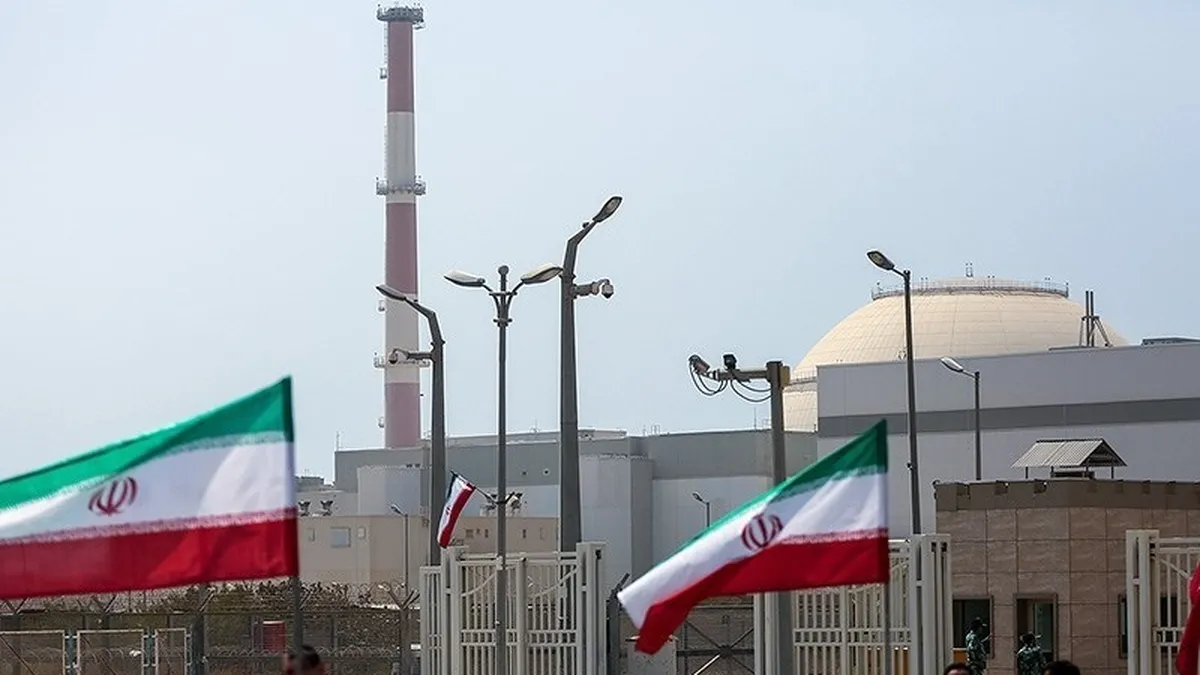
The Natanz facility sprawls across 100,000 square meters of desert, its above-ground buildings hiding a vast underground complex that houses Iran's most advanced centrifuge operations. Commercial satellite imagery shows the facility's continued expansion despite repeated sabotage attempts, with new ventilation systems and power infrastructure suggesting increased capacity for uranium enrichment.
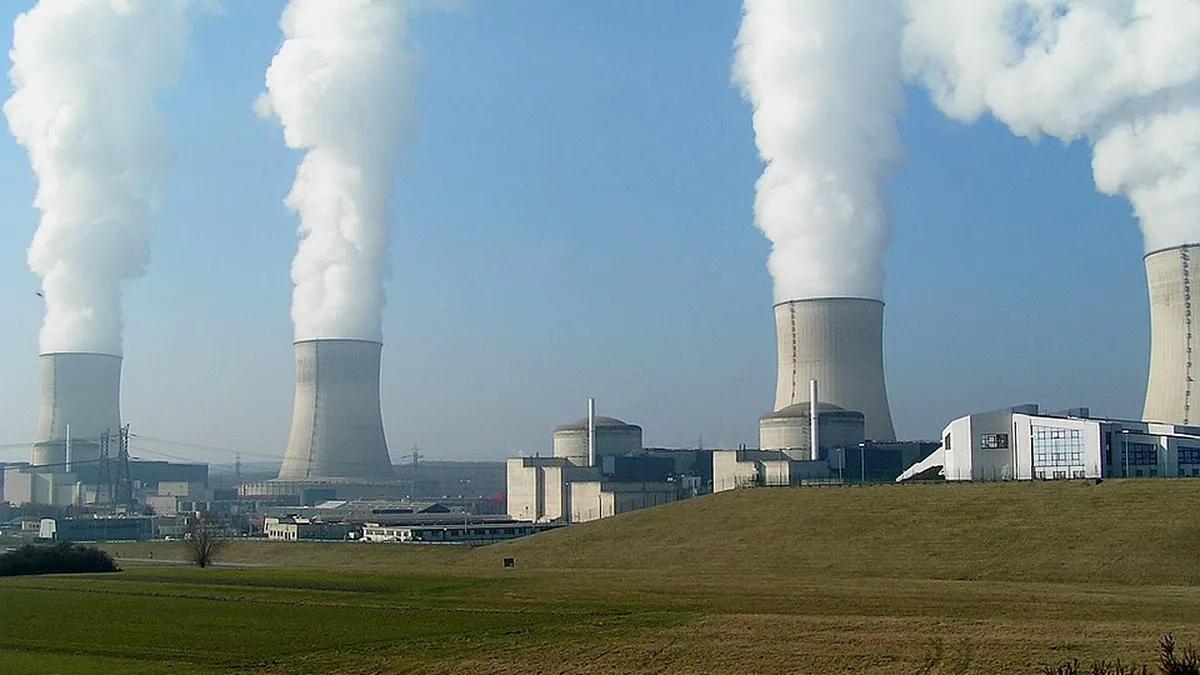
Iran operates nuclear facilities across multiple sites, creating redundancy that complicates both monitoring and potential military strikes. The primary enrichment occurs at Natanz and Fordow, while conversion and research activities spread across Isfahan, Arak, and Tehran Research Reactor. This distributed approach means destroying Iran's nuclear program would require simultaneous strikes on at least six separate locations.
Fordow presents the greatest challenge for military planners. Built inside Fordo mountain near Qom, the facility sits beneath 80 meters of rock and concrete, making it nearly invulnerable to conventional weapons. Iran began enriching uranium to 84% at Fordow in late 2025, choosing the site specifically for its defensive advantages. Intelligence reports suggest Iran could complete weapons-grade enrichment entirely within Fordow's protected environment.
The Isfahan Uranium Conversion Facility processes raw uranium ore into uranium hexafluoride gas, the feedstock for enrichment centrifuges. Satellite analysis by the Institute for Science and International Security shows significant expansion at Isfahan, with new processing lines capable of supporting much larger enrichment operations. The facility's central role means any comprehensive strike on Iran's nuclear program must include Isfahan targets.
Less visible but equally important are Iran's centrifuge manufacturing and research facilities. The TABA facility in Isfahan produces advanced IR-series centrifuges, while sites near Tehran conduct research on next-generation enrichment technology. These facilities ensure Iran can rapidly replace damaged centrifuges and continue advancing enrichment capabilities even under attack.
Iran has also developed mobile and temporary enrichment capabilities that complicate intelligence monitoring. Portable centrifuge cascades can be assembled in warehouses or underground facilities, then dismantled and moved before detection. This distributed approach means Iran's total enrichment capacity may exceed what international monitors can observe and track.
The Arak heavy-water reactor, modified under the 2015 nuclear deal to produce less plutonium, represents an alternative pathway to nuclear weapons that receives less attention than uranium enrichment. While Iran has complied with reactor modifications, it maintains heavy-water production capabilities that could support plutonium-based weapons development in the future.
Perhaps most concerning are the facilities Iran hasn't declared to international inspectors. The IAEA continues investigating four undisclosed sites where nuclear materials were allegedly stored or processed. Iran's refusal to provide full access suggests additional nuclear activities beyond what international monitors can verify. These shadow facilities may house the most sensitive weapons-related research.
The Diplomatic Track: Is a Deal Still Possible?
The last serious diplomatic engagement ended in March 2024 when Iranian negotiators walked away from indirect talks in Qatar, citing American "economic warfare" and Israeli military attacks as proof that the West sought regime change regardless of nuclear compromises. Eighteen months later, the diplomatic landscape has fundamentally shifted in ways that make renewed negotiations nearly impossible.
Iran's negotiating position has strengthened dramatically since 2024. With uranium enriched to 84% and breakout timeline measured in weeks rather than years, Tehran no longer faces urgent pressure to negotiate. The regime can afford to wait for better terms while continuing nuclear advancement. Supreme Leader Khamenei's representatives have indicated Iran would consider negotiations only after complete sanctions removal—a non-starter for Western governments.
The Trump administration's approach explicitly rejects the incremental diplomacy that characterized previous negotiations. Rubio's State Department has outlined a "comprehensive solution" that would address Iran's nuclear program, regional proxy activities, ballistic missile development, and human rights violations simultaneously. This maximalist position makes finding common ground with Iran virtually impossible.
European allies, exhausted by years of failed diplomatic efforts, have largely abandoned hopes for near-term breakthroughs. French President Macron's attempts at shuttle diplomacy collapsed in 2025 when Iran began enriching to weapons-grade levels despite European sanctions relief offers. German and British officials now focus on coordinating responses to Iranian nuclear capability rather than preventing it.
The regional dimension further complicates diplomatic solutions. Saudi Arabia and Israel have insisted on veto power over any American-Iranian nuclear agreement, arguing their security concerns must be addressed in any sustainable deal. Iran rejects including regional rivals in nuclear negotiations, viewing their participation as designed to prevent any possible agreement.
Russia and China, previously helpful in facilitating Iran nuclear talks, now view the crisis through the lens of broader confrontation with the West. Both powers benefit from American resources devoted to the Iranian nuclear crisis rather than Ukraine or Taiwan. Neither has incentive to pressure Iran toward compromise when the nuclear program diverts Western attention from other priorities.
Technical obstacles to a new nuclear agreement have also multiplied. Iran's advanced centrifuge knowledge cannot be unlearned, and its expanded nuclear infrastructure would be difficult to dismantle even under an agreement. Unlike 2015, when Iran had limited nuclear capabilities to constrain, any future deal must address near-nuclear-weapon status and advanced technical capabilities.
The domestic political dynamics in both countries have shifted against compromise. In Iran, nuclear advancement has become associated with national pride and resistance to foreign pressure. Iranian public opinion, shaped by years of sanctions and military threats, increasingly supports nuclear weapons development as protection against regime change attempts.
But here's what most analysts are missing: Iran may no longer want a nuclear deal. The regime has discovered that nuclear threshold status provides many strategic benefits of actual weapons without crossing red lines that trigger military action. This "nuclear hedging" strategy offers optimal leverage while minimizing risks—making diplomatic resolution even more challenging than most observers recognize.
What This Means for Oil Prices and the Global Economy
Energy traders in London and New York have learned to watch Grossi's travel schedule as closely as OPEC announcements. Every IAEA inspection visit to Iran, every Iranian statement about nuclear progress, every Israeli military exercise moves oil futures in ways that ripple through global economic systems. The Iran nuclear crisis has become the tail that wags the economic dog.
Current oil prices already reflect a significant "Iran premium"—estimated by Goldman Sachs