Qatar's $20B energy empire collapses as Iran strikes
World's largest LNG exporter begs Saudi Arabia for emergency loans after 700 Iranian strikes destroy gas terminals
DOHA — The Qatari energy minister's hands shook slightly as he signed the emergency loan documents. Five years to rebuild Ras Laffan. Twenty billion dollars gone this year alone.
That was Thursday. By Friday morning, three more European energy companies had suspended their Qatar contracts indefinitely.
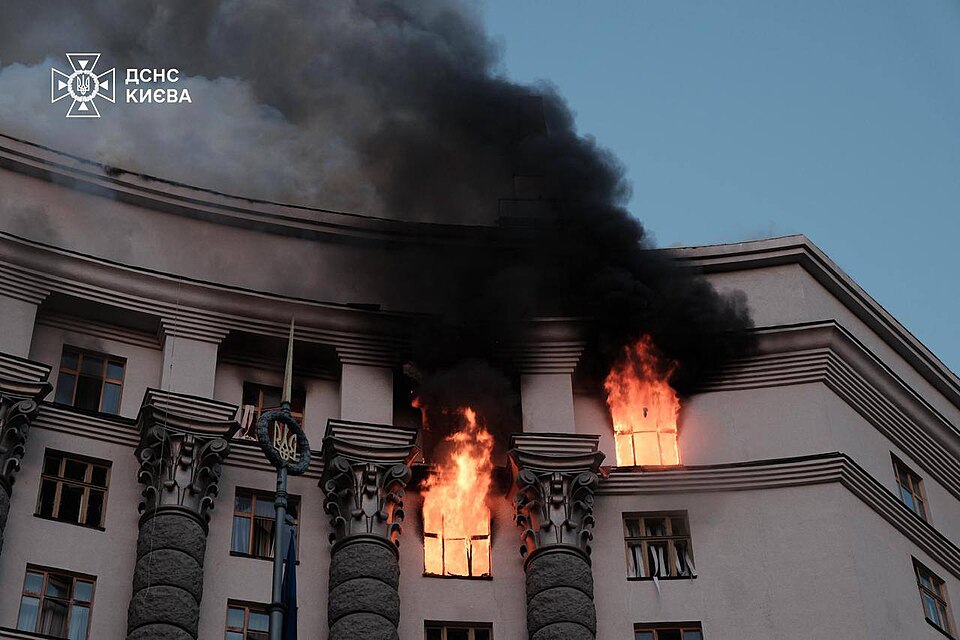
Qatar's energy empire — built over two decades into the world's largest LNG exporter — lies in ruins after 700 Iranian strikes targeted everything from gas terminals to the US bases that were supposed to protect them. The kingdom that once dictated global energy prices now begs for emergency financing from Saudi Arabia.
The numbers are brutal. Qatar supplied 21% of global LNG before the war. Zero percent now.
"We are witnessing the complete collapse of Qatar's energy sovereignty," said Sarah Chen, senior energy analyst at the Washington Institute. "This isn't just about one country. This is about reshaping global energy flows for the next decade."
Who fills the void
The immediate winners are clear. Australia's Woodside Energy announced Friday it will boost production 40% to capture Qatar's abandoned contracts. Russia's Gazprom, despite sanctions, quietly signed three new Asian deals this week. Even Nigeria is dusting off mothballed LNG facilities.
But the real prize goes to Saudi Arabia.
Crown Prince Mohammed bin Salman spent the war building new gas infrastructure while his neighbors burned. Aramco executives were in Tokyo, Seoul and Berlin within hours of Qatar's production halt, offering replacement contracts.
"The Saudis saw this coming," said a senior European energy executive who requested anonymity. "They've been preparing for Qatar's collapse since February."
The geopolitical implications run deeper than energy markets. Qatar spent years positioning itself as the indispensable mediator — hosting Hamas leaders, Taliban negotiations, prisoner swaps between Washington and Tehran. That influence evaporated with the gas terminals.
Energy Minister Saad al-Kaabi's admission that rebuilding could take five years assumes Iran allows it. The Islamic Republic's new Supreme Leader Mojtaba Khamenei has made clear that any reconstruction of "American military infrastructure" in the Gulf will face renewed attacks.
Translation: Qatar's energy industry is hostage to whatever deal emerges from the ceasefire talks.
The helium crisis nobody saw coming
Lost in the LNG headlines is a smaller but potentially more devastating shortage. Qatar produces 37% of the world's helium — the gas that keeps MRI machines running and computer chips manufacturing.
Semiconductor fabs in Taiwan and South Korea are already rationing helium supplies. Medical device companies warn that diagnostic equipment could start shutting down within weeks. The global helium reserve in Texas, already depleted, cannot fill the gap.
"This is a supply chain nightmare that will ripple through every advanced economy," said Dr. Michael Torres, who tracks critical materials at RAND Corporation. "You cannot make semiconductors without helium. You cannot run modern hospitals without helium."
The irony cuts deep. Qatar's rulers spent a decade diversifying beyond oil and gas, investing in everything from airlines to soccer teams. But helium was always a byproduct of natural gas processing.
No gas production means no helium.
Alternative sources exist — Algeria, Russia, the United States — but ramping up production takes years. The global helium market, worth $8 billion annually, now faces rationing that could last until 2028.
Trump's $1.2 trillion problem
Perhaps most embarrassing for Qatar is the collapse of its American influence operation. The kingdom promised Trump $1.2 trillion in investments during his Doha visit last May. Private jets, golf courses, real estate deals — all designed to buy protection from exactly this scenario.
It didn't work.
When Iranian missiles started falling, Trump's response was measured, focused on protecting US bases rather than Qatari infrastructure. The investment promises, according to three sources familiar with the discussions, are now "under review."
Qatar Airways, the kingdom's flagship carrier and symbol of its global ambitions, grounded its entire fleet for six weeks during the heaviest fighting. The airline that once connected 160 destinations now operates limited routes to Dubai and Kuwait. International passengers simply stopped coming.
Foreign residents — the backbone of Qatar's economy — fled in waves. The population dropped an estimated 400,000 people, roughly 15% of the total, according to internal government figures obtained by Reuters.
Hotels sit empty. Construction projects are abandoned. The 2030 World Cup expansion plans, once Qatar's signature project, are indefinitely postponed.
"Qatar built its entire model on being the stable hub in an unstable region," said Hassan al-Rashid, a Gulf political analyst based in Kuwait. "That model is dead."
The next OPEC+ meeting is scheduled for June 15 in Vienna. Qatar's production quota — if it has any production to quota — will be set there. For the first time in decades, Doha will arrive as a supplicant, not a power broker.
The kingdom that once moved global energy markets now watches them from the sidelines. The strategic shock, as officials privately admit, may be permanent.
Discussion