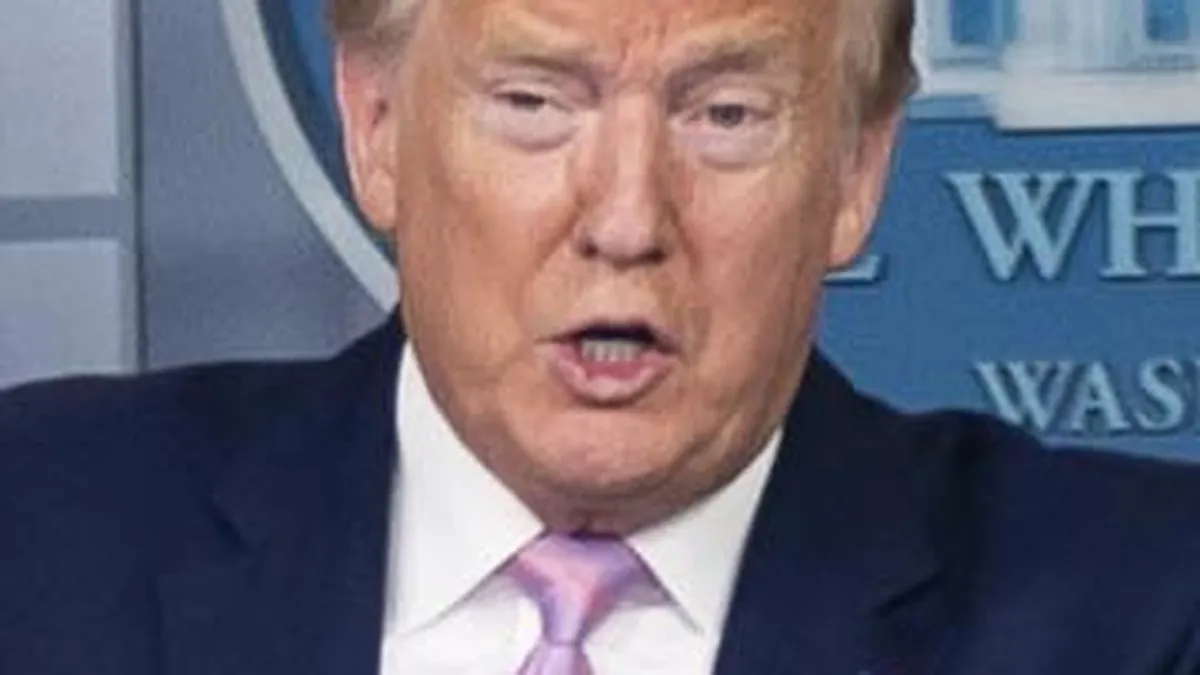
Trump calls Iran war 'nearly over' as oil drops $2.40
President's most optimistic assessment in 47 days contradicts Pentagon intelligence showing Iranian leadership in disarray
WASHINGTON — President Trump declared the Iran war "very close to over" on Thursday, the most optimistic assessment from the White House since fighting began 47 days ago.
His words moved markets instantly. Oil futures dropped $2.40 in after-hours trading. Defense stocks fell harder.
The president offered no timeline or evidence for his claim during a brief exchange with reporters outside the West Wing. When pressed for details, Trump said only that "good things are happening" and walked away.
But administration officials tell a different story behind closed doors.
What the commanders are watching:
Iran's new Supreme Leader Mojtaba Khamenei has not appeared publicly in six days. His last confirmed location was the Imam Reza shrine in Mashhad, 500 miles from Tehran's bombing zone.
"We're tracking multiple leadership sites," said one Pentagon official who requested anonymity to discuss intelligence matters. "The succession is messier than we anticipated."
Three Iranian generals died in Israeli airstrikes on Wednesday. The Revolutionary Guard confirmed only one death — Brigadier General Hamid Reza Zahedi, killed at a command post in Qom. Sources familiar with the strikes say two others died at the same location.
Iran's retaliation has been muted. Expected.
The regime launched 14 drones toward Israeli territory on Tuesday. All were intercepted. No ballistic missiles fired since April 9, when Iran's barrage of 180 projectiles overwhelmed Israel's Iron Dome in three sectors.
"They're running low on precision munitions," said Michael Eisenstadt of the Washington Institute for Near East Policy. "The question is whether they're saving them or simply don't have them."
Pakistan's push intensifies:
Prime Minister Shehbaz Sharif arrived in Tehran on Wednesday with his largest diplomatic delegation since taking office. Forty-seven officials. Not a normal negotiating team.
Sharif met with President Pezeshkian for four hours. No joint statement. No photo opportunity. Pakistani officials described the talks as "intensive" — diplomatic code for difficult.
The Pakistanis are offering Iran a face-saving exit. Full details remain classified, but the framework involves Iran accepting a temporary halt to uranium enrichment above 20 percent in exchange for limited sanctions relief.
Israel would stop targeting Iranian nuclear facilities. The US would release $6 billion in frozen Iranian assets — money originally earmarked for humanitarian purchases.
"It's not a peace deal," said one Pakistani diplomat. "It's a pause button."
Iran's response has been noncommittal. Foreign Minister Abbas Araghchi told his Pakistani counterpart that any agreement must include Israeli withdrawal from Lebanese territory — a demand Israel has already rejected.
The Lebanon complication:
Hezbollah fired 47 rockets into northern Israel on Thursday morning. The largest single barrage in two weeks. Israeli forces responded with artillery strikes on 12 positions in southern Lebanon.
But the escalation appears contained. Hezbollah avoided hitting civilian targets. Israel's response was proportional, measured.
"Both sides are signaling restraint," said Hanin Ghaddar of the Washington Institute. "They want to keep the Lebanon front separate from the Iran crisis."
Lebanese officials have opened their own channel to Israeli negotiators through French intermediaries. The talks focus on Hezbollah's withdrawal north of the Litani River — the same arrangement that ended the 2006 war.
Progress is slow. Hezbollah wants guarantees that Israel will not pursue its commanders once they move north. Israel insists on verification mechanisms that Hezbollah considers intrusive.
French President Emmanuel Macron plans to host both sides in Paris next week. His office confirmed the meeting Thursday but provided no details on participants or agenda.
What Trump isn't saying:
The president's optimism contradicts his own intelligence briefings. CIA assessments obtained by CNN show Iran's leadership remains divided on any negotiated settlement.
Mojtaba Khamenei faces pressure from hardline clerics who view compromise as betrayal of his father's legacy. The younger Khamenei has consolidated power since taking over in March, but his authority is not absolute.
Revolutionary Guard commanders want to continue the fight. They believe Iran can outlast Israel's military campaign and American political patience.
"The IRGC sees this as an existential battle," said one former CIA analyst. "They're not wrong."
Iran's economy is buckling under the dual pressure of war costs and expanded US sanctions. The rial has lost 23 percent of its value since fighting began. Bread lines have appeared in working-class neighborhoods of Tehran and Isfahan.
But economic pressure has not translated into political pressure on the regime. Street protests remain small and scattered.
The timeline ahead:
Pakistan's mediation efforts face a hard deadline. Sharif must return to Islamabad by Sunday to address parliament on the crisis. He cannot return empty-handed without facing a confidence vote.
Israel's military says it needs another two weeks to complete its campaign against Iran's nuclear facilities. Three sites remain untargeted: the underground enrichment plant at Fordow, the heavy water reactor at Arak, and a suspected weapons research facility near Parchin.
Trump's declaration that the war is "very close to over" may be premature. Or it may be the opening move in his own negotiation strategy.
The next 72 hours will clarify which interpretation is correct. Pakistan's deadline approaches. Iran's patience thins. Markets are betting on peace.
They have been wrong before.
Discussion