Iran keeps 200kg uranium despite US zero demand
Pakistan's army chief returns from Tehran with Iran's final answer on nuclear stockpiles — and it's not what Washington wanted to hear.
ISLAMABAD — Pakistan's army chief Asim Munir flew back from Tehran on Thursday carrying Iran's final answer on uranium stockpiles. It wasn't yes.
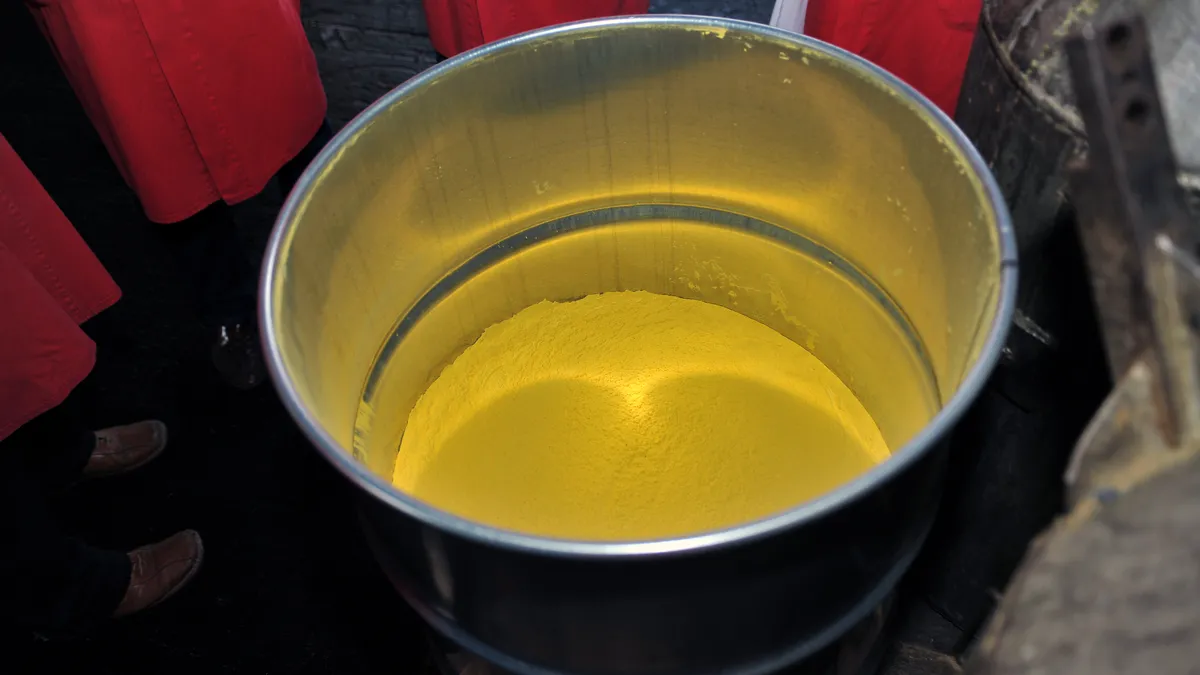
The deadlock centers on one technical detail that has torpedoed three weeks of shuttle diplomacy: Iran wants to keep 200 kilograms of 60% enriched uranium. The US demand is zero.
That gap — roughly the size of a briefcase — represents the difference between a nuclear deal and continued war.
The uranium standoff
Iranian negotiators told Munir they would transfer their entire stockpile of 20% enriched uranium to Russia for civilian reactor fuel. They offered to convert their 60% material down to 20%. But they refused to give up all highly enriched stocks.
"Iran's position is that 200kg at 60% is needed for the Tehran Research Reactor," said a Pakistani official briefed on the talks. "The Americans say any 60% material can be weaponized within weeks."
The physics support both arguments. Iran's aging research reactor does need highly enriched fuel. But 200kg of 60% uranium, if further enriched, provides enough fissile material for multiple warheads.
White House press secretary Karoline Leavitt confirmed Wednesday that Iran had offered to "turn over its stocks of enriched uranium" but declined to specify which grades or quantities. Iranian officials in Tehran were more precise: everything below 60% goes to Russia. Everything at 60% stays.
Pakistan's unlikely role
Munir has emerged as the broker nobody expected between Washington and Tehran, maintaining direct contact with both Trump and Supreme Leader Mojtaba Khamenei since his father's death in February strikes.
Pakistani intelligence sources say Munir carried three separate proposals to Tehran this week. Each involved different uranium transfer mechanisms. All required Iran to surrender its 60% stockpile.
"The Iranians kept coming back to the reactor argument," said the Pakistani official. "They want to keep just enough for civilian purposes. The problem is civilian purposes and weapons purposes look identical at this enrichment level."
Iran currently holds an estimated 128kg of uranium enriched to 60% — well above the 3.67% limit in the defunct 2015 nuclear deal but below the 90% needed for weapons. The 200kg figure represents what Iran says it needs for the next five years of reactor operations.
Moscow complicates everything
Russian President Vladimir Putin signaled readiness to accept Iranian uranium stocks, according to Kremlin spokesman Dmitry Peskov. But Russian officials want guarantees the material won't be returned if US-Iran talks collapse.
"Putin sees this as leverage over both Washington and Tehran," said a European diplomat tracking the negotiations. "Russia gets uranium supplies, Iran gets sanctions relief, and America gets a proliferation pause. Everyone wins except the deal has to hold."
The uranium-for-fuel swap mirrors arrangements Russia has with other countries, including Kazakhstan and Uzbekistan. Iran would ship raw uranium to Russia and receive fabricated reactor fuel in return.
But Iran's insistence on keeping 200kg of 60% material means the most proliferation-sensitive stocks stay in Iranian hands. That's the sticking point.
Lebanon ties the knot tighter
Iranian officials have tied progress on uranium talks to an immediate ceasefire in Lebanon, according to messages conveyed through Munir. Senior Iranian negotiators told Pakistani mediators that "without a ceasefire in Lebanon, there is no chance for progress in the talks between Iran and the United States."
That linkage pushed Trump to pressure Israeli Prime Minister Benjamin Netanyahu for a Lebanon deal, according to sources familiar with Thursday's diplomatic calls. Lebanese President Joseph Aoun had refused to speak directly with Netanyahu without concrete progress on a ceasefire.
The Lebanon-Iran connection reflects Tehran's calculation that Hezbollah's survival affects its regional deterrent against Israeli strikes on nuclear facilities.
The enrichment math
International Atomic Energy Agency inspectors last verified Iran's uranium stocks in March, before the current negotiations began. Iran has continued enriching uranium at its Fordow and Natanz facilities throughout the talks.
IAEA Director General Rafael Grossi told the agency's board this week that Iran's uranium production has accelerated since February, when Israeli strikes killed former Supreme Leader Ali Khamenei.
"Iran is now enriching uranium faster than at any point since 2019," said a Vienna-based nuclear expert. "They're building negotiating leverage while talks continue."
The 200kg threshold matters because uranium enrichment follows exponential curves. Moving from 60% to 90% weapons-grade requires far less time and centrifuge work than the initial enrichment from natural uranium to 60%.
US intelligence estimates suggest Iran could produce enough weapons-grade uranium for one nuclear device within two weeks if it chose to further enrich its current 60% stocks.
The next round of Pakistan-mediated talks is scheduled for Monday in Islamabad. Iranian Foreign Minister Abbas Araghchi is expected to attend, along with a senior US delegation.
Munir returns to Washington on Sunday to brief Trump and Vice President JD Vance on Iran's uranium position. The 200kg figure will travel with him.

Discussion