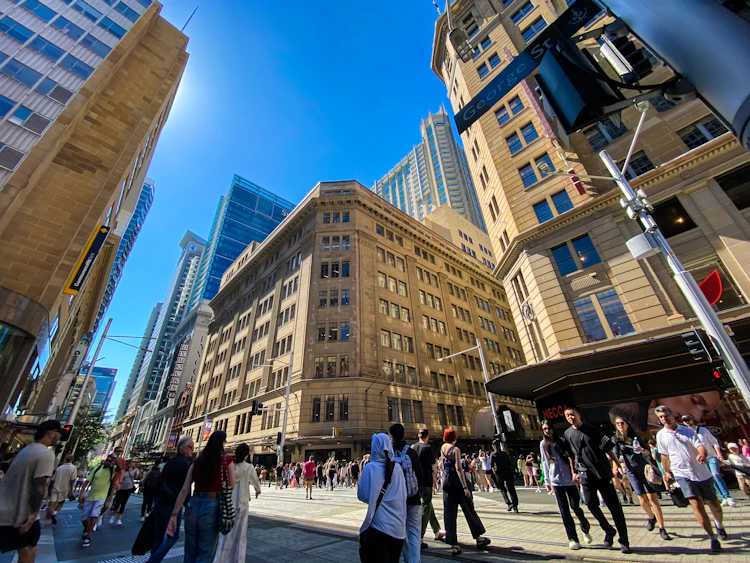
ASX rises as oil hits $105, energy stocks crater 9%
Australian markets defy Middle East chaos while Viva Energy collapses on refinery fire, Trump threatens Iran power plants
SYDNEY — The Australian sharemarket shrugged off another Strait of Hormuz closure Monday, ending higher despite oil spiking 7.9 percent when Iran's Revolutionary Guards shut the waterway again.
The S&P/ASX 200 climbed 6.4 points to 8953.5, breaking a five-week pattern of Monday selloffs that had become as predictable as the weekend escalations themselves.
But energy stocks paid the price. Hard.
Viva Energy collapsed 9.09 percent on its first day of trading since fire gutted its Geelong refinery's alkylation unit. The company promised 90 percent production within weeks. Investors weren't buying it. Woodside Energy dropped 2.93 percent, Santos fell 1.31 percent, and Ampol slumped 3.19 percent as Brent crude jumped toward $105 a barrel.
"The market's still carrying a risk premium into the deadline but just not fully committing to it," said Haris Khurshid, chief investment officer at Karobaar Capital in Chicago. "If things just continue as they are, you probably see a gradual push higher to around $105-$115, but with a lot of back and forth on headlines."
The contradiction tells the story of markets 14 weeks into this war: Australia's benchmark index rises while its energy companies crater, oil spikes while the dollar holds steady at US71.58 cents, and traders price in catastrophe while buying everything else.
Australian markets break from oil shock playbook
The pattern started five weeks ago. Every Monday, the ASX would open lower as weekend strikes from the US-Israeli campaign against Iran spooked investors. Every Monday except this one.
That shift reflects something deeper than sentiment. Australian banks and miners — the ASX's heaviest weights — are finding ways to hedge Middle East risk that didn't exist in previous oil crises.
National Australia Bank proved the exception Monday, tumbling 3.6 percent after revealing it would boost first-half credit impairment charges by $300 million due to "fuel supply and cost issues" from the conflict. Total charges hit $706 million. About $152 million reflects NAB's assessment that the economy will worsen if oil stays above $100.
The bank's pain is instructive. Shows which Australian companies are exposed and which aren't.
European natural gas surged 11 percent Monday as traders worried about supply chains beyond just oil. But Australian gas exporters like Woodside actually face headwinds from higher global prices — their long-term contracts with Asian buyers lock in lower rates, meaning they can't capitalize on spikes.
That's the opposite of what happened in 2008 or 1991, when energy companies led market rallies during Middle East crises.
Trump's infrastructure threat rewrites the math
President Donald Trump's overnight threat to strike Iranian power plants and bridges if no ceasefire deal emerges this week added a new variable to market calculations.
Previous US strikes targeted military and nuclear facilities. Power grids and civilian infrastructure represent escalation into economic warfare — the kind that could shut down Iranian oil exports entirely rather than just disrupting Strait of Hormuz transit.
"Nobody is saying this publicly, but the math is uncomfortable," said one Sydney-based energy trader who requested anonymity. "If Trump hits the power plants, Iran's export capacity goes to zero. That's different from closing Hormuz for a few days."
Iran maintains the strait closure is retaliation for the US blockade of Iranian ports, which Tehran claims violates ceasefire terms. The Revolutionary Guards announced the shipping ban Sunday, just days after briefly reopening the waterway.
Three scenarios drive trading floors
The ceasefire deadline looms Friday. Extension of the current truce would likely send Brent back toward $85 and lift the ASX above 9000. Escalation to infrastructure strikes could push oil toward $120 and potentially trigger the first ASX circuit breaker since March 2020.
A negotiated settlement that reopens both Hormuz and Iranian ports — the scenario traders aren't pricing in but diplomats in Islamabad are quietly discussing.
Viva Energy's Geelong fire adds a domestic wrinkle. Australia imports roughly 90 percent of its refined petroleum products, making local refinery capacity crucial during supply disruptions. The company's alkylation unit converts gases into high-octane gasoline components — exactly what's needed if Middle East supplies stay disrupted.
The weekend assessment confirmed damage was limited to that single unit, but ramping production back to 90 percent could take longer than Viva's "weeks" estimate if specialized equipment needs replacement from overseas suppliers.
Financial stocks outside NAB posted modest gains Monday, with the sector up 0.3 percent overall. That suggests banks are confident they can manage energy-related credit risks, at least in the short term.
But NAB's $300 million provision increase — split between direct fuel costs and broader economic deterioration — offers a preview of what's coming if oil stays elevated through the Australian winter.
The next test comes Tuesday when March inflation data hits. If energy costs are pushing consumer prices higher, the Reserve Bank of Australia faces an impossible choice between fighting inflation and supporting growth during a global crisis.
Markets close in Sydney at 4 PM Tuesday, six hours before the next round of ceasefire talks begin in Islamabad.

Discussion