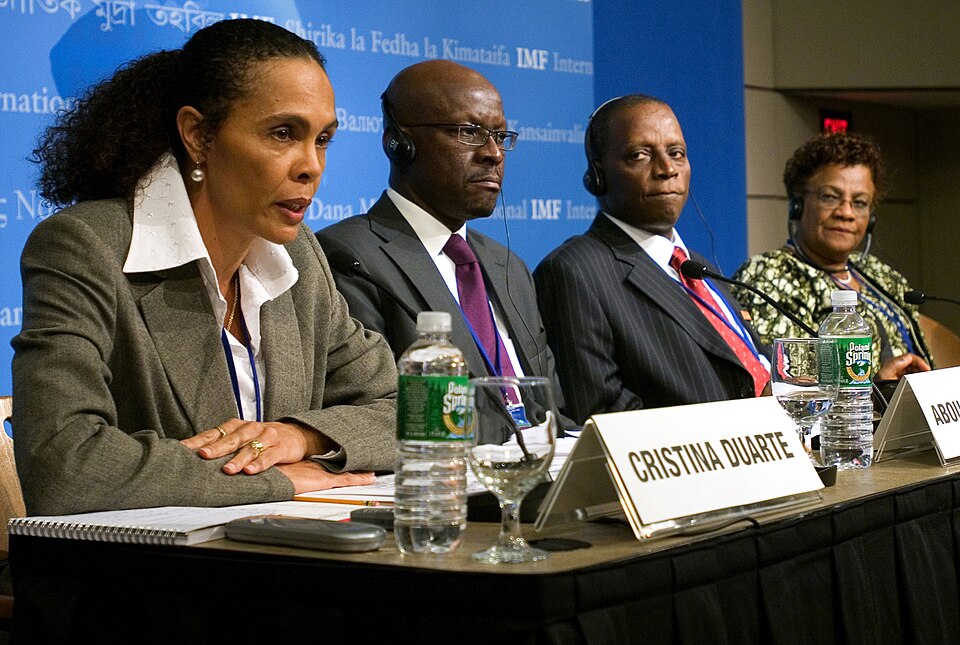
IMF splits on Iran sanctions, no joint statement
Treasury Secretary Yellen blocks European push for energy stability language as oil hits $98. First breakdown since 2008.
WASHINGTON — The International Monetary Fund's spring meetings collapsed Thursday without a joint statement on Iran sanctions. First time since 2008.
Treasury Secretary Janet Yellen walked out of closed-door talks after blocking European attempts to include language about energy market stability. "We're not writing Iran a permission slip," she told reporters afterward.
The breakdown exposes deepening fractures in the global financial system as Trump's Iran war enters its third month. Traditional allies are choosing between economic survival and military objectives.
Markets react immediately
Brent crude jumped to $98.40 on Thursday, up 3.2% after news of the IMF impasse leaked. European banks dumped $12 billion in Iran-linked positions this week alone.
But Asian development banks are quietly maintaining credit lines to Iranian trading partners. Two different wars being fought.
"The Americans want a financial war. We want functioning energy markets," said a European Central Bank official who demanded anonymity. "Those are not the same thing."
Germany's industrial production has fallen 8% since February when U.S. strikes killed former Supreme Leader Ali Khamenei. French refineries operate at 60% capacity. Italy's energy imports from Algeria have tripled.
Yellen's calculation is simple: financial pressure will force Iran's new Supreme Leader Mojtaba Khamenei into negotiations faster than diplomatic outreach.
Pakistan plays all sides
Pakistani Finance Minister Muhammad Aurangzeb attended despite his country's official neutrality. He held 11 bilateral meetings in two days. None officially about Iran.
Sources familiar with the talks said Aurangzeb carried messages from Tehran to European counterparts about potential exit ramps. Pakistan has emerged as the primary back-channel since direct diplomacy collapsed in March.
"Islamabad is playing a very sophisticated game," said Brad Setser, senior fellow at the Council on Foreign Relations. "They're positioning themselves as indispensable while keeping their economy insulated from sanctions blowback."
Pakistan's rupee has strengthened 12% since the crisis began. Their ports handle diverted Iranian oil under complex legal arrangements that technically comply with U.S. sanctions.
Chinese silence speaks volumes
Chinese officials attended every session but made no public statements. That silence is strategic.
"Beijing is watching to see if the dollar-based system can survive a major stress test," said Karen Dynan, former Treasury assistant secretary now at Harvard's Kennedy School. "If European allies break ranks on sanctions enforcement, that changes everything about financial power."
The Chinese delegation included People's Bank Governor Pan Gongsheng and Finance Minister Lan Fo'an. Both held private meetings with Middle Eastern sovereign wealth fund managers. Topics unknown.
The oil still flows
Iran pumped 2.8 million barrels daily before the crisis. That's down to 1.1 million now, according to tanker tracking data. But the missing 1.7 million barrels aren't all lost.
Much moves through informal channels — Pakistani ports, Iraqi pipelines, Turkish intermediaries. Smaller flows. Harder to track. But they exist.
"The sanctions are working if you define working as raising costs and creating uncertainty," said Robert McNally, president of Rapidan Energy Group and former White House oil adviser. "They're not working if you define working as stopping Iranian oil sales."
That gap between official policy and market reality drives the diplomatic tensions playing out in international financial meetings.
Trump's April 30 deadline
The president faces a choice on secondary sanctions against European banks maintaining Iran-linked business. That would force direct confrontation with allies already frustrated by the IMF breakdown.
European officials privately warn that secondary sanctions could trigger broader decoupling of transatlantic financial systems. The euro strengthened against the dollar Thursday as traders positioned for potential monetary policy divergence.
Yellen's Treasury team is split. Deputy Secretary Wally Adeyemo favors maximum pressure. Under Secretary Jay Shambaugh wants alliance unity preserved.
Next test: G7 finance ministers meet May 2 in Hiroshima. Japan pushes for compromise that maintains sanctions pressure while creating space for energy market stability.
Iranian negotiators are expected in Islamabad that same weekend. The timing is not coincidental.
Discussion