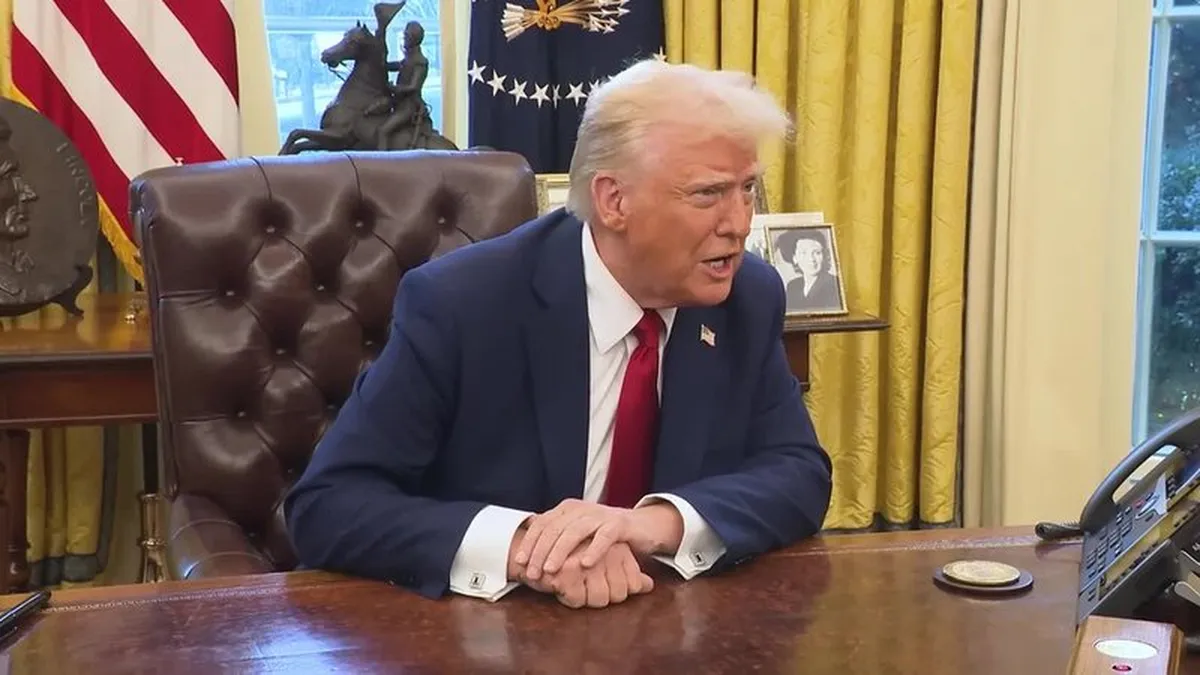
Trump's Iran War Fractures GOP Before Midterms
As oil hits $110 and Republican senators break ranks, the President faces his biggest political crisis since taking office
WASHINGTON — The Republican Party is eating itself alive over Iran. Just eight months before midterm elections that could reshape Trump's second term, the President's military escalation against Tehran has triggered the deepest GOP schism since he returned to office.
Oil prices have shattered the $110 barrier for the first time since 2022, sending shockwaves through an economy already grappling with persistent inflation. But this time, it's not just market volatility — it's a full-scale political crisis that threatens Republican control of Congress.
What's happening
• GOP senators publicly breaking with Trump's Iran strategy
• Energy prices hitting household budgets nationwide
• Internal White House feuding over military options
Why it matters
• 2026 midterms could flip Congressional control
• Economic pain hitting core Republican voters
• Trump's foreign policy authority under question
⬇ Full breakdown below
The Republican Revolt
Senator Marco Rubio of Florida, once Trump's closest foreign policy ally, fired the opening shot last week. "We need clarity on our Iran objectives, not endless escalation," Rubio told reporters, marking a stunning break from his usual lockstep support.
The rebellion extends far beyond Rubio. Sources inside the Senate Republican caucus describe "panic" over polling data showing suburban voters abandoning the party over rising gas prices and war fears.
"This isn't 2003," said a senior GOP strategist who requested anonymity. "Americans don't want another Middle East war, and they definitely don't want $5 gasoline."
Here's what most people are missing: this isn't really about Iran policy. It's about political survival.
The White House War Within
Internal administration disputes have reached a breaking point, with Defense Secretary Mike Pompeo reportedly clashing with National Security Advisor Robert O'Brien over military options. The feuding has paralyzed decision-making at the highest levels.
Trump himself appears increasingly isolated, with longtime advisors questioning his judgment on Iran. "The President is getting advice from a shrinking circle," one former administration official told The Meridian.
This is where it gets dangerous: a weakened president facing domestic opposition may feel pressured to escalate abroad.
Economic Pressure Points
Energy markets are pricing in worst-case scenarios. Beyond crude oil, natural gas futures have spiked 23% in two weeks, while heating oil contracts signal a brutal winter for American consumers.
The economic pain runs deeper than energy. Agricultural commodities dependent on diesel fuel are surging, threatening food price inflation that could persist through election season.
"We're looking at a perfect storm of energy costs, food inflation, and political uncertainty," said Dr. Sarah Chen, energy economist at Georgetown University.
And this is what markets are really afraid of: a prolonged conflict that disrupts global supply chains just as the economy was finding stability.
Electoral Mathematics
Republican strategists are running nightmare scenarios for November. Internal polling shows Trump's approval rating dropping 8 points in key swing districts since the Iran crisis began.
The party's suburban problem — already acute after 2020 — is metastasizing. Women voters, crucial to Republican hopes in competitive districts, are fleeing over war concerns and economic anxiety.
"We could be looking at 2006 all over again," warns one House Republican leadership aide, referring to the midterm massacre that cost Republicans both chambers under George W. Bush.
That changes everything for Trump's second-term agenda.
What Comes Next
The President faces an impossible choice: de-escalate and appear weak to his base, or double down and risk electoral catastrophe. Neither option offers clear political victory.
Senate Majority Leader Mitch McConnell has remained conspicuously silent, a telling sign that even Trump's most reliable ally is hedging bets. House Speaker Mike Johnson faces growing pressure from his caucus to distance the chamber from Iran policy.
But here's the catch: Trump has never backed down from a fight, especially when his authority is questioned. The combination of external pressure from Iran and internal Republican revolt could push him toward more aggressive action, not less.
The real test hasn't even begun yet. If Iran retaliates for recent American strikes, Trump will face the ultimate political pressure cooker — managing a shooting war while his own party abandons him eight months before voters render their verdict.
Readers seeking deeper context on Trump's foreign policy challenges may benefit from examining his broader Middle East strategy since returning to office.

Discussion