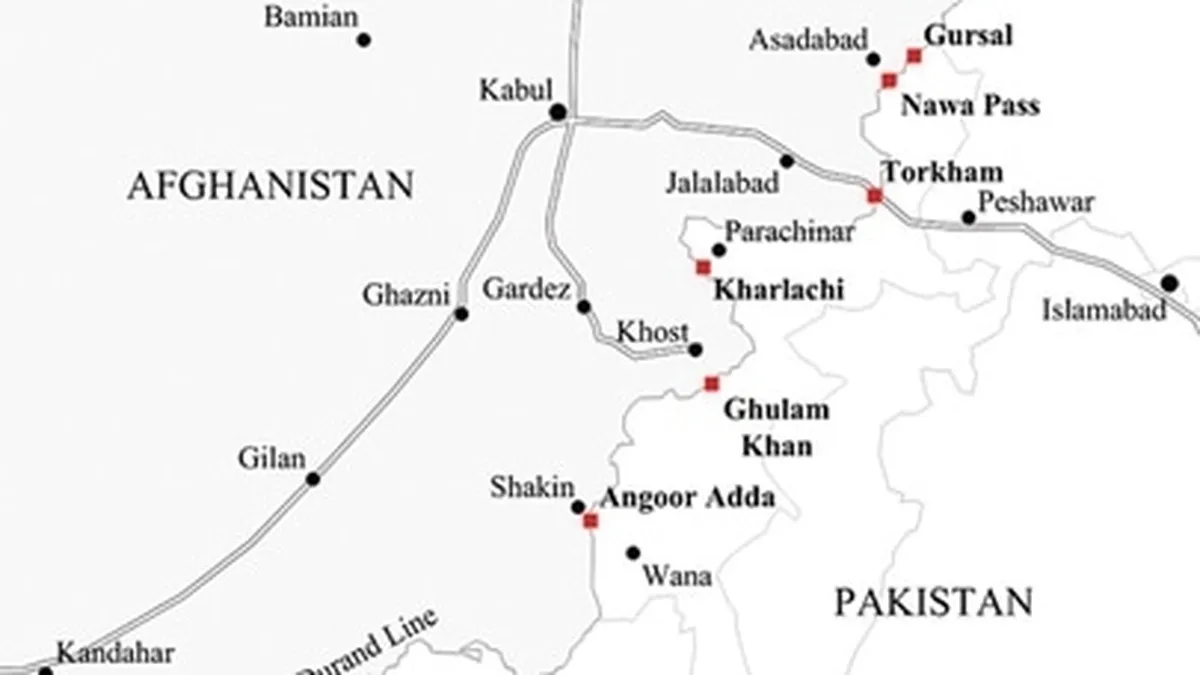
Pakistan-Afghanistan clashes threaten US-Iran peace talks
Border violence erupts as Islamabad positions itself as regional diplomatic mediator
ISLAMABAD — Pakistan's gamble to become the diplomatic hub for Middle East peace talks faces its first major test as border clashes with Afghanistan threaten to derail Islamabad's carefully orchestrated image as a neutral broker. The timing couldn't be worse.
What's happening
• Pakistan and Afghanistan traded heavy artillery fire along their disputed border
• Violence erupted days after both sides agreed to a temporary ceasefire
• Clashes coincided with Pakistan's announcement to host US-Iran talks
Why it matters
• Regional stability essential for successful diplomatic mediation
• Pakistan's credibility as neutral broker now under scrutiny
• Energy markets already pricing in diplomatic failure risk
⬇ Full breakdown below
The border violence exposes a fundamental contradiction in Pakistan's diplomatic strategy. You can't credibly mediate international conflicts while simultaneously fighting your neighbor. Yet that's exactly the position Islamabad finds itself in as it prepares to host what could be the most significant US-Iran dialogue in decades.
Here's what most people are missing: Pakistan's push for diplomatic prominence isn't just about regional influence — it's about economic survival.
Economic Stakes Behind Diplomacy
Pakistan desperately needs the legitimacy and potential economic benefits that come with successful international mediation. The country faces a mounting debt crisis, with foreign reserves barely covering two months of imports. Hosting successful peace talks could unlock billions in international investment and aid.
"Pakistan sees this as a pathway out of its current economic isolation," says Dr. Sarah Chen, South Asia analyst at the Geneva Institute for Strategic Studies. "But the Afghanistan border crisis undermines everything they're trying to build."
This is where it gets dangerous: energy markets are already factoring in the possibility that regional instability could derail any US-Iran breakthrough.
Regional Power Dynamics
The timing reveals how interconnected regional conflicts have become. Pakistan hosted discussions with regional powers about Middle East de-escalation on the same day its forces exchanged fire with Afghanistan. The contradiction isn't lost on international observers.
Markets aren't reacting. They're panicking.
Oil futures jumped 3.2% in early Asian trading as investors questioned whether Pakistan can maintain the stability necessary for meaningful US-Iran engagement. The Karachi Stock Exchange dropped 180 points as domestic confidence wavered.
"When your own backyard is on fire, it's hard to convince others you can put out fires elsewhere," notes Ambassador Richard Holbrook, former US negotiator now with the Atlantic Council.
What Comes Next
Pakistan faces a narrow window to contain the Afghanistan crisis before it completely undermines its diplomatic ambitions. The government must demonstrate control over its own security situation while maintaining credible neutrality for US-Iran talks.
But here's the catch: any heavy-handed response to Afghanistan could escalate regional tensions precisely when Pakistan needs to project stability.
Energy prices reflect this uncertainty. Brent crude remains elevated as markets price in the risk that regional instability could spread beyond Afghanistan-Pakistan borders, potentially affecting Iranian oil exports or disrupting broader Middle East peace efforts.
And this is what markets are really afraid of: a cascade effect where one regional conflict undermines diplomatic solutions to others, leaving energy supplies vulnerable to multiple simultaneous disruptions.
The real test hasn't even begun yet. Pakistan must now prove it can manage its own neighborhood conflicts while facilitating dialogue between global powers whose relationship affects energy markets, nuclear proliferation, and regional stability from the Gulf to Central Asia.
Readers seeking background on US-Iran relations and previous diplomatic efforts should examine the historical context of nuclear negotiations and regional proxy conflicts.

Discussion