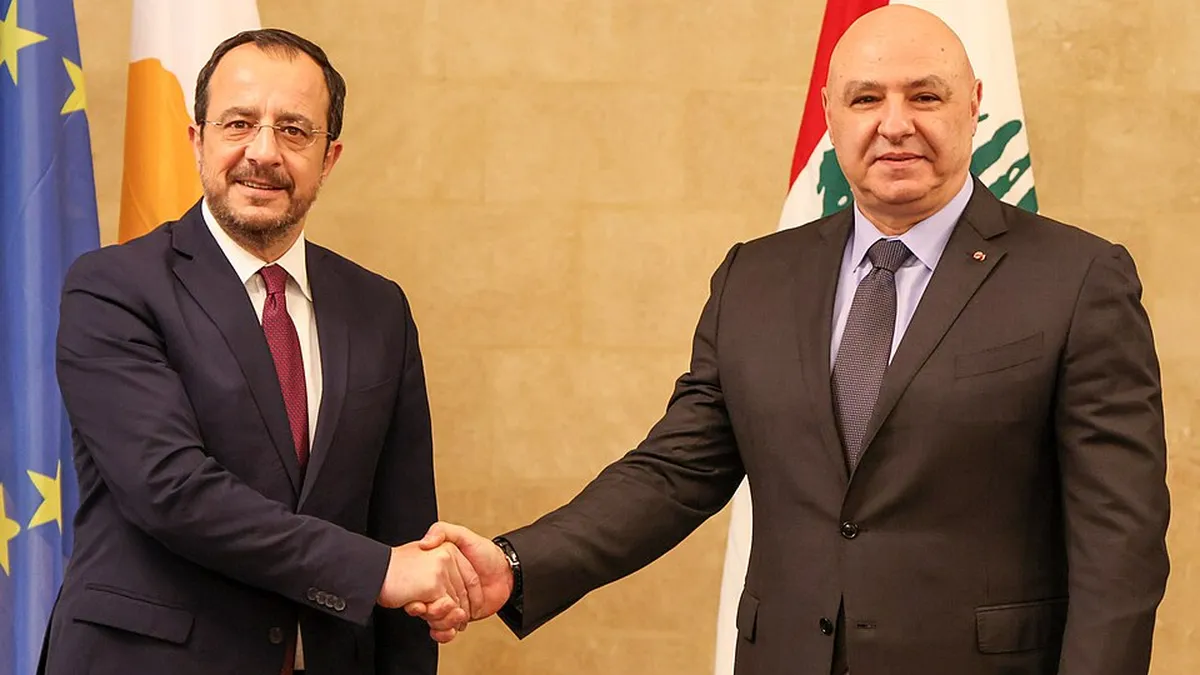
Lebanon's Aoun meets Israel envoy but can't deliver
President negotiates ceasefire he cannot enforce as Hezbollah operates independently of Beirut's control
BEIRUT — Lebanese President Joseph Aoun will meet Israeli Ambassador David Saranga in Washington on Tuesday to negotiate a ceasefire. But he has no authority to deliver what Israel wants most: Hezbollah's surrender.
The meeting marks the first direct diplomatic contact between Lebanon and Israel since the war resumed in February. Neither country expects it to work.
Why this round is different
Aoun is operating without Hezbollah's consent. The Shia militia controls southern Lebanon, maintains 40,000 fighters, and answers to Tehran — not Beirut. Previous ceasefire talks included Hezbollah representatives. This one doesn't.
"The president can sign whatever paper he wants," said Walid Jumblatt, the Druze leader who has watched Lebanon's wars for five decades. "Hezbollah will do what Iran tells them to do."
That creates an impossible dynamic. Israel demands Hezbollah withdraw north of the Litani River and surrender its weapons. Hezbollah refuses. Aoun has no mechanism to force compliance from a group that fields more rockets than most European armies.
The diplomatic choreography reveals the constraints. US Secretary of State Marco Rubio arranged the Washington meeting after Iran agreed to a temporary ceasefire with Israel last week. But Iran's ceasefire doesn't bind Hezbollah, which operates as an independent franchise.
Lebanese officials acknowledge the contradiction privately. One cabinet minister, speaking on condition of anonymity, described Aoun's position as "negotiating for a country he doesn't fully control."
What the commanders are watching
Israeli strikes killed 347 people in Lebanon on April 7 alone — the deadliest day since the war resumed. The bombing targeted Hezbollah weapons depots in Baalbek, command centers in Dahieh, and rocket launchers along the border.
Hezbollah responded with 200 rockets into northern Israel. Forced evacuations in Haifa and Kiryat Shmona. The militia's rocket production continues despite Israeli interdiction efforts. Intelligence sources estimate Hezbollah manufactures 50 rockets daily in underground facilities.
The military balance hasn't shifted decisively. Israel controls Lebanese airspace but cannot prevent rocket fire. Hezbollah lost senior commanders but maintains operational capacity. Neither side can deliver a knockout blow.
That stalemate drives the diplomatic effort. Israel wants international guarantees that Hezbollah will disarm. Lebanon wants Israeli withdrawal and reconstruction aid. The gap remains unbridgeable.
UN peacekeepers in southern Lebanon report 40 violations of the November 2024 ceasefire daily. Most involve Israeli reconnaissance flights. Some include cross-border shooting. The monitoring mechanism established under that deal collapsed within months.
The Iranian calculation
Supreme Leader Mojtaba Khamenei inherited a weakened position after his father's death in February. Iran's oil exports have crashed 30% due to Israeli bombing of terminals. The economy faces its worst crisis since the 1980s.
But Iran cannot afford to abandon Hezbollah without losing its primary deterrent against Israeli strikes on nuclear facilities. The militia serves as Iran's forward defense, keeping Israeli forces occupied on multiple fronts.
Iranian officials have signaled flexibility on Lebanon while maintaining support for Hezbollah's core mission. Room for tactical adjustments — ceasefires, repositioning — but not strategic surrender.
President Aoun understands these constraints. The former army commander spent decades navigating Lebanon's sectarian politics. He knows Hezbollah's red lines.
His strategy appears focused on incremental steps: prisoner exchanges, humanitarian corridors, partial withdrawals. Small moves that might create momentum without triggering Hezbollah's veto.
"Disarmament can't be done by force," Aoun told reporters in August. That principle guides his approach. He believes patient negotiation can achieve what military pressure cannot.
Critics call it wishful thinking. Hezbollah has rejected every disarmament proposal since 1989. The group views its weapons as non-negotiable insurance against Israeli aggression.
The numbers that matter
Lebanon's economy has contracted 15% since the war resumed. Tourism revenue disappeared. Port activity dropped 60%. The Lebanese pound trades at 95,000 to the dollar — a record low.
Reconstruction costs exceed $8 billion, according to World Bank estimates. Lebanon cannot finance rebuilding without international assistance. Donors demand political reforms and Hezbollah's disarmament before releasing funds.
That creates leverage for Aoun. He can argue that continued war impoverishes all Lebanese communities, including Hezbollah's Shia base. Economic pressure might accomplish what military force cannot.
The Tuesday meeting will test whether diplomacy can bridge these gaps. US officials express cautious optimism about establishing humanitarian corridors and prisoner exchanges. Broader issues remain unresolved.
Israeli Prime Minister Benjamin Netanyahu faces domestic pressure to end the Lebanon conflict. Military reserves are stretched across multiple fronts. Public support for indefinite war is declining.
But Netanyahu also cannot accept a ceasefire that leaves Hezbollah intact and rearmed. His political survival depends on demonstrating Israeli deterrence.
The Washington talks begin at 2 PM local time. Both ambassadors carry limited mandates. Real decisions rest with leaders in Jerusalem, Beirut, and Tehran who won't be in the room.



Discussion