Iraq ships first oil through Syria in decade, bypasses Iran
Baghdad moves 21,000 tons daily through reopened crossing as Hormuz tensions force new Mediterranean route
BAGHDAD — The Greek-flagged tanker Asahi Princess pulled away from Syria's Baniyas terminal Thursday carrying 30,000 barrels of Iraqi crude. First shipment through the Mediterranean route in over a decade.
This isn't diversification. This is Baghdad betting that Syria can handle what could become Iraq's primary oil lifeline if tensions with Iran escalate further.
The truck convoy reality
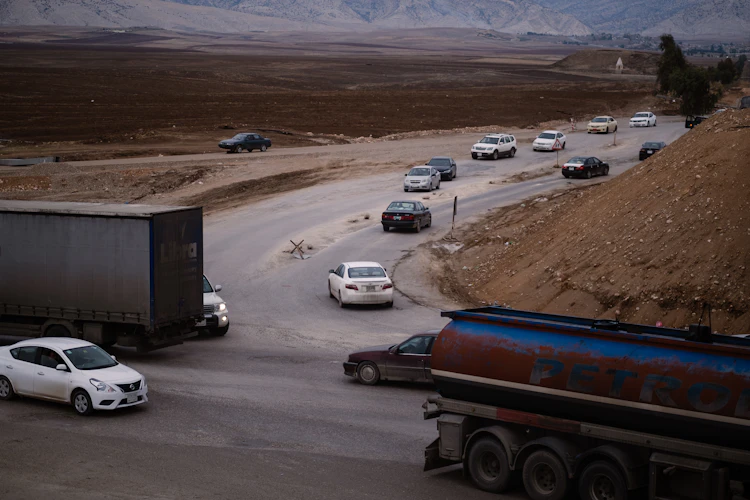
The numbers tell the story. Iraq is already pushing 500-700 tanker trucks daily through the newly reopened al-Waleed border crossing into Syria, according to Emad Masha'al, district manager for Anbar's al-Rutba. Each truck carries 30 tons.
Do the math. That's 15,000-21,000 tons of crude crossing into Syria every day.
"We can handle more than 1,000 trucks daily in the near future," Masha'al told Rudaw on Monday. The Syrians are installing additional pumps at Baniyas to speed up the process. Current capacity: 300 tankers per day at the port itself.
Ali Nizar, head of Iraq's State Organization for Marketing of Oil, called Thursday's first Mediterranean shipment a "milestone in opening a new marketing route." He's not overselling it. Iraq has been effectively trapped between two chokepoints since the Iran war began — the Strait of Hormuz to the south, Turkey's cooperation to the north.
Syria changes that calculation entirely.
Why now matters
The al-Waleed crossing reopened last month after 11 years of closure dating to Syria's civil war. Baghdad wasted no time. Within weeks, hundreds of trucks were rolling west toward the Mediterranean instead of south toward the Persian Gulf.
Energy analysts are watching this closely. "Iraq is essentially building a western corridor while everyone focuses on the Gulf," said Michael Knights of the Washington Institute. "If this route proves reliable, it reshapes regional oil flows."
The timing is deliberate. Iraq's traditional export infrastructure remains vulnerable despite the ceasefire between Iran, Israel and the United States that took hold last week. Supreme Leader Mojtaba Khamenei, who assumed power after his father's death in February airstrikes, has repeatedly threatened to close the Strait of Hormuz if sanctions tighten further.
Iraq pumps 4.2 million barrels daily. Most still flows south through Basra terminals. But the Syria route offers something the Gulf cannot — distance from Iranian missile range.
Market reaction
Brent crude closed Thursday at $87.40, up 1.2% on supply concerns. Traders are pricing in the possibility that Iraq's northern routes through Turkey could face disruption if Ankara decides to pressure Baghdad over Kurdish oil exports.
The Syria option removes that leverage.
There's another angle here. This isn't just Iraqi oil moving through Syria — it's Iraqi money flowing into Syrian coffers. Transit fees, port charges, storage costs. Damascus gets a cut of every barrel that moves through Baniyas.
President Bashar al-Assad's government needs the revenue. Syria's economy remains shattered from 13 years of war. Iraqi oil exports could provide steady income as reconstruction efforts continue.
"This is as much about Syrian economic recovery as Iraqi energy security," said a Western diplomat in Baghdad who requested anonymity. "Assad sees this as a long-term revenue stream."
Three-way bet
Iraq plans to reopen additional crossings. The Rabia border point in Nineveh province is scheduled to reopen later this month, providing an alternative route to Turkey. That gives Baghdad three directions for oil exports — south through the Gulf, north through Turkey, west through Syria.
Challenges remain. Syria's infrastructure is still rebuilding. The road network between al-Waleed and Baniyas can handle current volumes but may struggle if Iraq scales up significantly. Port capacity at Baniyas is limited compared to major Gulf terminals.
Security is another concern. While the crossing area is stable, the route passes through regions that saw heavy fighting during Syria's civil war. Any instability could disrupt flows.
Iraqi officials are confident. SOMO is "exerting further efforts to maximize and increase Iraqi exports amid all the logistical, technical, and security challenges," Nizar said Thursday.
The first tanker is symbolic. But the daily truck convoys are the real story. Iraq is quietly building an alternative to Gulf dependence while regional tensions simmer.
Next test comes in May when OPEC+ meets to discuss production quotas. Iraq has been pushing for higher allocations, arguing its new export capacity justifies increased output. The Syria route strengthens that argument.
The Asahi Princess is already heading toward European refineries. More tankers are being loaded at Baniyas this week.


Discussion