Hezbollah rocket buries 1,500-year Byzantine mosaic
Ancient Christian church floor survives Persians, earthquakes — then takes direct hit from Katyusha in northern Israel
NAHARIYA, Israel — The mosaic survived 1,400 years. Persian armies in 614 AD. Earthquakes. Neglect. Then Hezbollah fired a Katyusha rocket at it Friday night.
The 1,500-year-old Byzantine church floor in this northern Israeli city now sits buried under concrete and steel. The protective pavilion that Israeli archaeologists built in 2022 — at a cost of 2.8 million shekels — lies in ruins. But the mosaic itself? Probably intact.
"The debris pattern suggests the mosaic floor is undamaged," said Nurit Feig, northern district archaeologist for the Israel Antiquities Authority. "We won't know until we clear the rubble. But these mosaics are remarkably resilient."
The irony cuts deep. Ancient Persians destroyed the original church. Modern Iran's proxies just tried to finish the job.
The 2.8 million shekel gamble
The church was rediscovered in 1964 during municipal construction work. For decades, the 500-square-meter mosaic lay exposed to weather and vandalism. The IAA spent two years creating a climate-controlled pavilion to preserve it. March 2022 opening.
The mosaic depicts geometric patterns and Christian symbols in blues, greens, and gold. Dating to roughly 550 AD, it represents one of the largest intact Byzantine church floors in the region.
"We were getting 15,000 visitors a year," Feig said. "School groups. Christian pilgrims. Archaeological societies. It was becoming a real cultural site."
The rocket struck at 11:47 PM Friday. No casualties. The building's reinforced concrete absorbed most of the impact, but the roof collapsed, burying the ancient floor under tons of debris.
6,500 projectiles since March
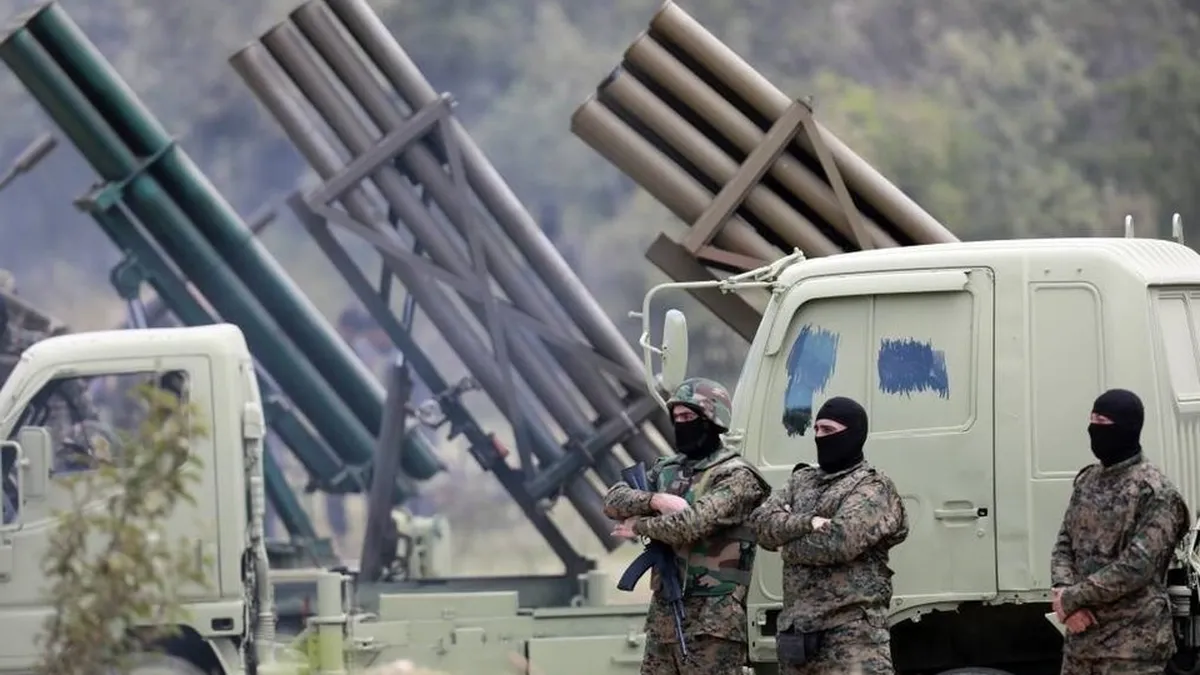
This was not random fire. Since March 1, Hezbollah has launched over 6,500 projectiles at Israeli civilian targets. The pace is accelerating — 340 rockets in the past 72 hours alone.
"They're targeting infrastructure systematically," said Colonel Ronen Manelis, former IDF spokesman now with the Institute for National Security Studies. "Power stations, water facilities, archaeological sites. This is cultural warfare."
The Byzantine church sits 3.2 kilometers from the Lebanese border. Well within range of Hezbollah's 122mm rockets. But the militants had to aim deliberately — the site occupies less than half a hectare.
Similar attacks hit the Kursi archaeological park near the Sea of Galilee last month. Hezbollah rockets damaged sections of Caesarea's Roman aqueduct in March.
"Pattern recognition is intelligence work," Manelis said. "This isn't collateral damage."
The 180 million shekel preservation budget
Israel spends roughly 180 million shekels annually preserving archaeological sites. That includes Byzantine churches, Crusader fortresses, Ottoman mosques. The IAA employs 47 full-time archaeologists in the north alone.
Many sites have Christian significance. The church in Nahariya. The monastery ruins at Kursi. The Crusader cathedral in Akko. Israeli authorities maintain them all.
"We don't ask about religion when we excavate," said Gideon Avni, IAA chief archaeologist. "History belongs to humanity. Our job is preservation."
But preservation requires security. And security means military action against those firing rockets at archaeological sites.
The contradiction plays out daily. Israeli jets strike Hezbollah positions to protect sites that Hezbollah targets. International observers condemn the strikes. They ignore the targeting.
Christian leaders stay quiet
Pope Francis condemned Israeli operations in Lebanon last week. He called for "protection of cultural heritage" in the region. His statement made no mention of Hezbollah's systematic targeting of Christian sites.
The World Council of Churches issued similar appeals. So did the Anglican Archbishop of Canterbury. None addressed Friday's attack on the Byzantine church.
"The silence is deafening," said Father Gabriel Naddaf, a Greek Orthodox priest in Nazareth. "When Islamic militants destroy Christian heritage, where is the outrage?"
The pattern holds across denominations. Christian leaders who rushed to condemn temporary Israeli security measures at Jerusalem's Church of the Holy Sepulcher remain silent about Hezbollah's rocket attacks on Christian archaeological sites.
4.2 million shekels to dig out history
The IAA will begin clearing debris Wednesday. Engineers must first ensure the pavilion's foundation remains stable. Then comes the delicate work of removing concrete chunks without damaging the mosaic below.
"We're optimistic," Feig said. "The mosaic survived the original Persian destruction. It survived 1,400 years of exposure. It can survive this."
The cleanup will cost an estimated 4.2 million shekels. Insurance covers structural damage but not archaeological restoration work. The IAA must find emergency funding.
Meanwhile, Hezbollah continues firing. Three more rockets hit northern Israel Sunday morning. None struck archaeological sites. This time.
The Byzantine mosaic waits under its concrete tomb. A 1,500-year-old artwork caught between ancient hatreds and modern warfare. The Persians tried to destroy it once.
Their ideological heirs just tried again.


Discussion