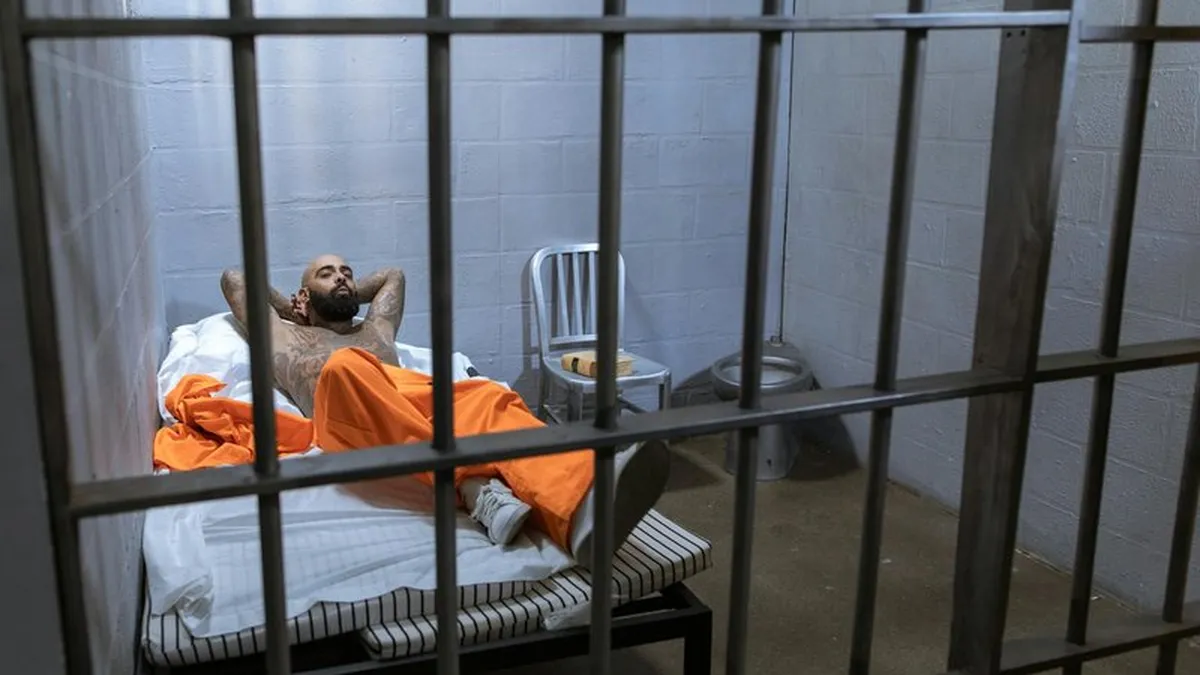
Gaza detention crisis exposes Israel's record gaps
Missing paperwork leaves families trapped between death certificates and prisoner lists in systematic breakdown
TEL AVIV — The paperwork says Malak Abu Mady is dead. The prison records suggest she's alive in Israeli custody.
This isn't an isolated case — it's become the defining crisis of Israel's detention system as it grapples with the largest influx of Palestinian prisoners in decades.
What's happening
• Death certificates issued for detainees later found on prisoner lists
• Families receiving conflicting information from multiple agencies
• Legal advocates reporting systematic documentation failures
Why it matters
• International law violations mounting
• Families trapped in bureaucratic limbo
• Regional credibility at stake
⬇ Full breakdown below
What Happened
Tahrir Abu Mady received her daughter's death certificate three months ago. Last week, a leaked prisoner manifest showed Malak's name among 847 detainees held at Ofer Prison.
"We've documented at least 200 similar cases since January," says Dr. Sarah Feldman, director of the Jerusalem Institute for Human Rights. "The system isn't just overwhelmed — it's structurally broken."
The crisis stems from Israel's rapid expansion of detention facilities to accommodate what officials describe as "security threats" from Gaza. But the infrastructure to track these detainees never scaled accordingly.
Here's what most people are missing: this isn't about individual bureaucratic errors.
The Deeper Problem
Israel's detention apparatus now holds an estimated 12,000 Palestinians — triple the number from 2024. The Shin Bet, Israel Defense Forces, and Prison Service each maintain separate databases that rarely sync.
"You have three different agencies processing the same individuals with no unified tracking system," explains former Shin Bet official Amos Gilad. "It's a recipe for exactly what we're seeing now."
Families receive death notifications from military sources while their relatives appear on civilian prisoner rosters. Some detainees vanish from all records entirely.
This is where things start to break down.
Regional Implications
The documentation crisis is becoming a diplomatic liability as international observers demand transparency. The International Committee of the Red Cross has suspended prison visits pending "credible record reconciliation."
"Israel's credibility on prisoner treatment was already under scrutiny," says Middle East analyst Dr. Khalil Shikaki from the Palestinian Center for Policy Research. "These record-keeping failures suggest either incompetence or deliberate obfuscation — neither helps Israel's case."
Egyptian mediators have privately warned that prisoner exchange negotiations cannot proceed without reliable manifests. Qatar has suspended its humanitarian coordination role.
But this is only part of the story.
What Comes Next
The Israeli government announced a "comprehensive audit" of all detention records, but legal experts warn the damage may be irreversible. Families are filing habeas corpus petitions in unprecedented numbers.
"We're looking at potential war crimes charges if systematic concealment is proven," says international law professor Yuval Shany from Hebrew University. "The burden of proof is now on Israel to demonstrate these are administrative errors, not policy."
The crisis is forcing a fundamental question about detention practices that extends beyond Gaza. How does a democratic state maintain security operations while preserving rule of law?
And here's what that actually means: every day this continues, Israel's international standing erodes further.
The real test hasn't even begun yet — when prisoner exchanges resume, these documentation gaps could collapse negotiations entirely, leaving families on both sides trapped in a bureaucratic void with no path to resolution.


Discussion