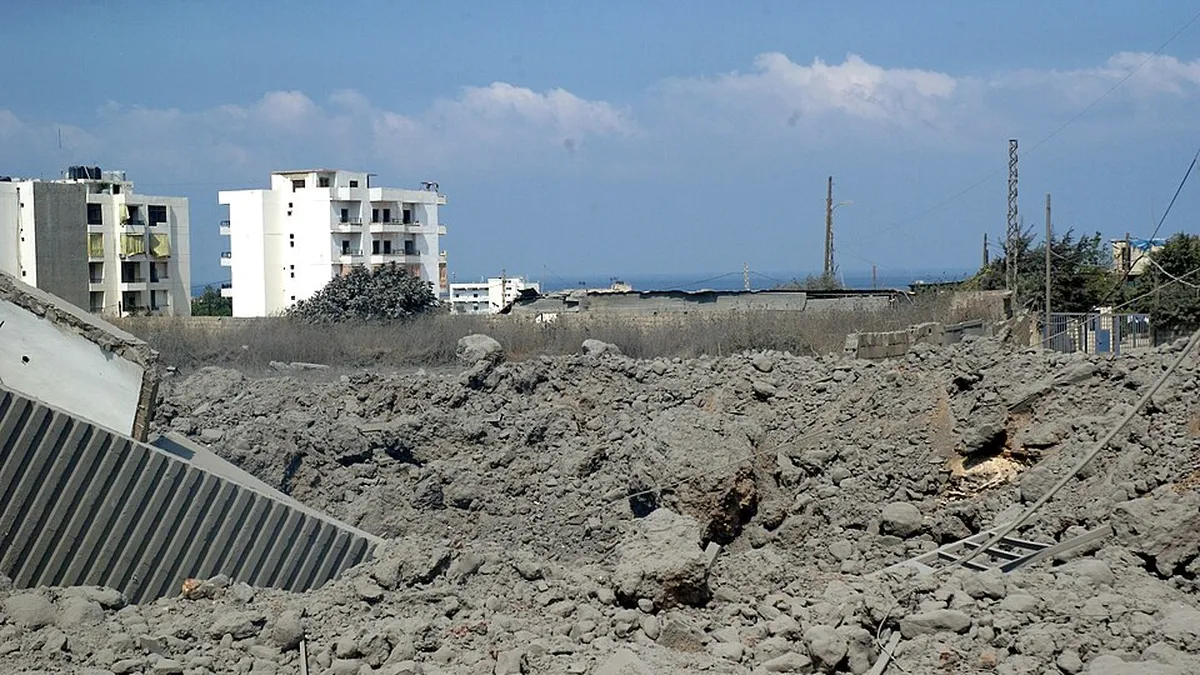
Lebanon Bleeds As US-Iran Truce Excludes Key Player
182 killed in Israeli strikes hours after Washington-Tehran ceasefire. Beirut demands inclusion or threatens wider war.
LONDON — At 4:30 a.m. Beirut time, Mariam Khalil was brewing coffee in her apartment when the windows exploded inward. The Israeli airstrike on southern Beirut's suburbs had missed her building by 200 meters, but the message was clear: Lebanon's exclusion from the new US-Iran ceasefire would be enforced with precision munitions.
What's happening
• Israeli strikes killed 182 across Lebanon hours after US-Iran truce announced
• Lebanon excluded from ceasefire framework despite Iranian backing
• Beirut demands inclusion or threatens to derail broader peace efforts
Why it matters
• Regional stability depends on Lebanese compliance with excluded framework
• Iranian proxies could escalate if ally remains under attack
• Oil markets watching for spillover beyond current $108 per barrel
⬇ Full breakdown below
The Exclusion Gambit
The timing reveals Washington's calculated risk. By announcing a bilateral ceasefire with Tehran while Israeli jets pounded Lebanese targets, the Trump administration is testing whether Iran will sacrifice its most valuable proxy for broader strategic gains.
"This is diplomatic surgery with a chainsaw," said Michael Eisenstadt of the Washington Institute for Near East Policy. "You're asking Iran to watch its premier allied militia get dismantled in exchange for sanctions relief."
The strikes targeted Hezbollah strongholds across three fronts: Beirut's southern suburbs, the traditional Shia heartland of southern Lebanon, and arms supply routes through the Bekaa Valley. Israeli military sources confirmed the operations continued under existing rules of engagement, unaffected by the Tehran accord.
Lebanese officials responded with ultimatum diplomacy. A senior government source told international mediators that Beirut would only participate in regional talks if Israeli operations ceased immediately.
Iran's Proxy Dilemma
Tehran faces an impossible choice. Accept the ceasefire and abandon Hezbollah to Israeli degradation, or escalate through proxies and risk the broader détente that could lift crippling economic sanctions.
Iran's Deputy Foreign Minister Abbas Araghchi framed the stakes starkly, telling state media that Washington "must choose between war and ceasefire" — but his government's actions suggest they've already chosen containment over confrontation.
The calculation appears straightforward: Hezbollah's 40,000 rockets mean less than Iran's nuclear program and economic survival. But this logic assumes Lebanese militias will accept abandonment without retaliation.
Regional Spillover Risks
Markets are pricing in containment, but the exclusion strategy carries three dangerous assumptions. First, that Hezbollah won't escalate independently of Iranian direction. Second, that Lebanese state collapse won't destabilize Syria and Jordan. Third, that other Iranian proxies in Iraq and Yemen won't interpret the abandonment as precedent.
"We're seeing the controlled demolition of Iran's regional network," said Firas Maksad of the Middle East Institute. "But controlled demolitions can still bring down neighboring buildings."
The next 72 hours will determine whether selective ceasefires can work in interconnected conflicts. Lebanese government sources indicate they have 48 hours to receive inclusion guarantees before considering "alternative responses" — diplomatic language that could mean anything from UN appeals to militia escalation.
What Comes Next
Watch for three indicators: Iranian Revolutionary Guard communications to Lebanese allies, Israeli Cabinet discussions on expanding operations, and Lebanese government meetings with international mediators.
If Lebanon's exclusion holds, expect Iran to test American resolve through other proxies. The ceasefire with Tehran may have ended one war while starting three smaller ones.
The mathematics are stark: regional peace cannot be built on selective exclusions when proxy networks span borders and conflicts interconnect across supply lines, command structures, and strategic objectives.




Discussion